Gransnet forums

Chat

R-I-P Mary Quant

(98 Posts)
infoman Thu 13-Apr-23 13:29:44

at the age of 93

StephLauraine Sat 15-Apr-23 18:26:35

RIP Mary Quant. My first job was secretary to creative manager for Mary Quant Cosmetics at Gala Cosmetics. Happy days plastered in Starkers and drenched in AM or PM perfume.

leeds22 Sat 15-Apr-23 15:26:43

I had 2 Mary Quant dresses + a Courrege copy. Loved them all. What great fun fashion was in the 60s.

tictacnana Sat 15-Apr-23 11:05:17

Loved her designs. I even had her libsided bob hair cut for a while.

Foxygloves Sat 15-Apr-23 09:12:45

RIP

valsdomain Sat 15-Apr-23 09:08:07

Loved Mary Quant designs! I remember not having money to buy her dresses etc but my friend and I used to make copies and remember wearing the sleeveless a-line dresses (they were easy to make too!) and waistcoat and mini skirt worn with a polo neck sweater. She was really at the forefront at that time. An exciting time for fashion then.

LucyW Fri 14-Apr-23 20:52:43

I had a Mary Quant wallpaper border in the early seventies. It was about 18 inches wide and had lots of lovely pixies and mushrooms on it. Mine was purple but it came in orange too. I loved it. She was a total icon.

Esmay Fri 14-Apr-23 20:20:18

I also loved Mary Quant , Barbara
Hulaniki at Biba and Lee Bender at Bus Stop - later came Laura Ashley .

I copied Quant's simple shift dresses .

The only successful haircut that I had was her asymmetrical bob though it took some effort to iron out the curls .

Those were very happy days .

RIP Mary .

Farzanah Fri 14-Apr-23 20:19:26

I loved everything about the 60s, clothing, music, fashion, and the style that Mary Quant promoted.

dizzygran Fri 14-Apr-23 20:13:14

RIP MQ. Loved the mini skirts in the 60s - great memories of the fun times and Biba and LONDON.

TerriBull Fri 14-Apr-23 20:12:24

Glorianny

I think the dresses actually fitted most girls really well. They skimmed over your waist if you didn't have much of one and were not tight fitting. Unlike the pencil skirts and cinched in waists of the "50s. They were also amazingly easy to make. A couple of seams, a few darts and perhaps a zip.

This is true, the dresses were easy to wear

TerriBull Fri 14-Apr-23 20:11:11

oops heroin chic not heroine

Glorianny Fri 14-Apr-23 20:10:51

I think the dresses actually fitted most girls really well. They skimmed over your waist if you didn't have much of one and were not tight fitting. Unlike the pencil skirts and cinched in waists of the "50s. They were also amazingly easy to make. A couple of seams, a few darts and perhaps a zip.

Kate1949 Fri 14-Apr-23 20:07:59

Exactly "kitty*. Mary helped make the 60s fun and exciting for me. I never thought about it as anything else.

TerriBull Fri 14-Apr-23 20:02:23

I don't think it's fair to lay the whole gamut of eating disorders on the shoulders of Mary Quant. True that was the era that launched Twiggy and she was the perfect clothes horse for the type of garments MQ designed. In spite of her choir boy hairstyle, and her very straight up and down figure I never perceived Twiggy as androgenous, she always came across as a girl to me, albeit one who was flat chested, but then some women are naturally so. More recently Keira Knightly got the same sort of stick for purportedly being an anorexic but I think I remember she sued a newspaper for misrepresenting her in their assertion that she was. Whilst I didn't particularly appreciate having curves myself once I emerged into my teen years, because they had "gone out of fashion" in the late sixties and early seventies, I didn't particularly want to look like Twiggy body wise, although I did like her, neither did it send me on the path towards anorexia because in spite of the "annoying appendages" I was pretty slim, without being stick like. Far more disturbing than the penchant for ultra skinny models in the 60s imo was the "heroine chic"that emerged in the nineties. I think models, whatever their era, 50 included, tended to be on the slender side because like it or not clothes are often displayed to their best effect on the svelte.

I'm with Kate though this is a tribute to Mary Quant who was a trailblazer in her field and I look back with great fondness (maybe through rose coloured specs) on that era and loved the look created by her and Biba's founder Barbara Hulanicki which moved us away from the rather formal set hair and tailored clothes of the 1950s, although I admit I did fall in love with that look when I first watched Man Men.

I celebrate the fact that Mary Quant along with her contemporaries in the music/acting and arts world made it a great time to be young.

kittylester Fri 14-Apr-23 19:55:04

It's rubbish to equate the two anyway Kate. I was likened Sandie Shaw more that once and loved miniskirts etc. However, I got married and had 5 children and forgot to worry about me and my figure.

Kate1949 Fri 14-Apr-23 18:58:39

Can we not have a separate thread about eating disorders, who is to blame etc and leave this as a thread to pay tribute to Mary Quant?

varian Fri 14-Apr-23 18:55:46

Many would have described MM as a very attractive normal woman.

Twiggy and the other skinny androgynous models who suddenly became ultra fashionable in the 1960s were not typical at all but that look was suddenly what teenage girls, and even older women , were supposed to aspire to.

Hence the start of the anorexia epidemic.

Lovetopaint037 Fri 14-Apr-23 18:55:41

I remember her shop (Bazaar) opening in 1955. I was 14 years old and remember our neighbour knocking at our door to ask if we had seen that “strange shop” which had opened in the Kings Road. The window did appear different to us then. I was told for years she continued to go to Vidal Sassoon’s to have her hair done. Sorry to hear of her death but pleased she had a long life.

Glorianny Fri 14-Apr-23 18:36:19

varian

Mary Quant was very influential ,in the 1960's, showing us teenagers that we did not need to dress like our mothers.

But there was a downside. She promoted the androgenous look of models like Twiggy - very skinny, flat chested , just like a young teenage boy. For those normal girls with breasts and hips this look was impossible to achieve.

And so began an epidemic of anorexia.

This is a medical article from 2001:-

"Eating disorders are a complex group of illnesses that often are seen in the adolescent female population. During the past three decades, the prevalence of eating disorders has increased dramatically; currently, the overall incidence is approximately 5 percent.1,2 Although eating disorders generally occur in adolescents, they are now seen much more often in children and adults, including the elderly.3 Initially, eating disorders were believed to affect only socioeconomically advantaged white women; however, this stereotype has not held true. These diseases affect persons of all social classes and both sexes.3 The increase in the prevalence and incidence of eating disorders is multifactorial.4 Increased awareness among patients and physicians is partly responsible for the increase, but the media, the fashion industry and changing societal norms are equally responsible.

This rise in the incidence of eating disorders can be best illustrated by tracing recent history. In the 1940s and 1950s, the movie star Marilyn Monroe, whose figure was curvaceous and somewhat Rubenesque, exemplified the ideal woman's figure. However, by 1967 a 92 lb British teenager, “Twiggy,” was the most famous fashion model and her “ultra thin” prepubescent body was perceived as the ideal figure for women. In the 1970s and 1980s, eating disorders finally received media attention with the death of singer Karen Carpenter, who died of cardiac complications of anorexia nervosa. This was the first time the media focused on the fact that eating disorders can have life-threatening consequences and are not simply a group of “benign” psychiatric illnesses. Since then, public awareness and understanding have continued to grow as more and more celebrities and athletes disclose their personal battle with these diseases. Unfortunately, icons such as the late Princess Diana of Wales

Eating disorders are a complex group of illnesses that often are seen in the adolescent female population. During the past three decades, the prevalence of eating disorders has increased dramatically; currently, the overall incidence is approximately 5 percent.1,2 Although eating disorders generally occur in adolescents, they are now seen much more often in children and adults, including the elderly.3 Initially, eating disorders were believed to affect only socioeconomically advantaged white women; however, this stereotype has not held true. These diseases affect persons of all social classes and both sexes.3 The increase in the prevalence and incidence of eating disorders is multifactorial.4 Increased awareness among patients and physicians is partly responsible for the increase, but the media, the fashion industry and changing societal norms are equally responsible. This rise in the incidence of eating disorders can be best illustrated by tracing recent history. In the 1940s and 1950s, the movie star Marilyn Monroe, whose figure was curvaceous and somewhat Rubenesque, exemplified the ideal woman's figure. However, by 1967 a 92 lb British teenager, “Twiggy,” was the most famous fashion model and her “ultra thin” prepubescent body was perceived as the ideal figure for women. In the 1970s and 1980s, eating disorders finally received media attention with the death of singer Karen Carpenter, who died of cardiac complications of anorexia nervosa. This was the first time the media focused on the fact that eating disorders can have life-threatening consequences and are not simply a group of “benign” psychiatric illnesses. Since then, public awareness and understanding have continued to grow as more and more celebrities and athletes disclose their personal battle with these diseases. Unfortunately, icons such as the late Princess Diana of Wales may have romanticized these illnesses and made them appear less serious and life threatening than they are."

I think this article is a bit inaccurate.MM was regarded as overweight by the studio. Hollywood had been attempting to promote a thin version of women for decades and was responsible for things like the Grapefruit Diet.

varian Fri 14-Apr-23 18:11:10

Mary Quant was very influential ,in the 1960's, showing us teenagers that we did not need to dress like our mothers.

But there was a downside. She promoted the androgenous look of models like Twiggy - very skinny, flat chested , just like a young teenage boy. For those normal girls with breasts and hips this look was impossible to achieve.

And so began an epidemic of anorexia.

This is a medical article from 2001:-

"Eating disorders are a complex group of illnesses that often are seen in the adolescent female population. During the past three decades, the prevalence of eating disorders has increased dramatically; currently, the overall incidence is approximately 5 percent.1,2 Although eating disorders generally occur in adolescents, they are now seen much more often in children and adults, including the elderly.3 Initially, eating disorders were believed to affect only socioeconomically advantaged white women; however, this stereotype has not held true. These diseases affect persons of all social classes and both sexes.3 The increase in the prevalence and incidence of eating disorders is multifactorial.4 Increased awareness among patients and physicians is partly responsible for the increase, but the media, the fashion industry and changing societal norms are equally responsible.

This rise in the incidence of eating disorders can be best illustrated by tracing recent history. In the 1940s and 1950s, the movie star Marilyn Monroe, whose figure was curvaceous and somewhat Rubenesque, exemplified the ideal woman's figure. However, by 1967 a 92 lb British teenager, “Twiggy,” was the most famous fashion model and her “ultra thin” prepubescent body was perceived as the ideal figure for women. In the 1970s and 1980s, eating disorders finally received media attention with the death of singer Karen Carpenter, who died of cardiac complications of anorexia nervosa. This was the first time the media focused on the fact that eating disorders can have life-threatening consequences and are not simply a group of “benign” psychiatric illnesses. Since then, public awareness and understanding have continued to grow as more and more celebrities and athletes disclose their personal battle with these diseases. Unfortunately, icons such as the late Princess Diana of Wales

Eating disorders are a complex group of illnesses that often are seen in the adolescent female population. During the past three decades, the prevalence of eating disorders has increased dramatically; currently, the overall incidence is approximately 5 percent.1,2 Although eating disorders generally occur in adolescents, they are now seen much more often in children and adults, including the elderly.3 Initially, eating disorders were believed to affect only socioeconomically advantaged white women; however, this stereotype has not held true. These diseases affect persons of all social classes and both sexes.3 The increase in the prevalence and incidence of eating disorders is multifactorial.4 Increased awareness among patients and physicians is partly responsible for the increase, but the media, the fashion industry and changing societal norms are equally responsible. This rise in the incidence of eating disorders can be best illustrated by tracing recent history. In the 1940s and 1950s, the movie star Marilyn Monroe, whose figure was curvaceous and somewhat Rubenesque, exemplified the ideal woman's figure. However, by 1967 a 92 lb British teenager, “Twiggy,” was the most famous fashion model and her “ultra thin” prepubescent body was perceived as the ideal figure for women. In the 1970s and 1980s, eating disorders finally received media attention with the death of singer Karen Carpenter, who died of cardiac complications of anorexia nervosa. This was the first time the media focused on the fact that eating disorders can have life-threatening consequences and are not simply a group of “benign” psychiatric illnesses. Since then, public awareness and understanding have continued to grow as more and more celebrities and athletes disclose their personal battle with these diseases. Unfortunately, icons such as the late Princess Diana of Wales may have romanticized these illnesses and made them appear less serious and life threatening than they are."

Lyndie Fri 14-Apr-23 17:56:09

Kitty I agree. I thought she was much younger. I met her when I was in my teens. I worked for a cosmetic company at the time which did a range of cosmetics for her.

bibibetti Fri 14-Apr-23 17:32:32

A very cool lady and great artist R I P Mary

farview Fri 14-Apr-23 16:55:32

Loved Mary Quant.. RIP..🌷🌷

semperfidelis Fri 14-Apr-23 16:51:23

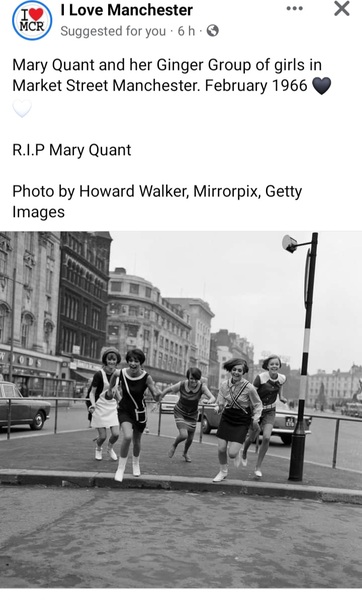
Esme Young, of the Sewing Bee, gave a wonderful talk about Mary Quant some time ago. It wasn't just the innovative designs, but the cut of the clothes and the materials she used. No viscose in sight! I managed to buy a pair of fine woollen knee length shorts, from her Ginger Group collection. They were finished off with wide bands of purple and black round each leg. They were incredibly unusual for the time. I wish I had a photo, but I don't. I wish I'd kept them; they'd be worth a fortune now.

JudyBloom Fri 14-Apr-23 16:32:54

I recommend Mary Quant's Autobiography, named 'Quant by Quant' it is a fabulous read. I loved her designs especially the Mini skirt which I proudly adopted in my youth at the time.
R.I.P. Mary.