I think there is evidence that taxing cigarettes at least has reduced their use especially amongst the young.
Would you make the deal? Let’s talk about Dorian Gray.
Sign up to Gransnet Daily
Our free daily newsletter full of hot threads, competitions and discounts
Subscribe
Has anyone been following the investigation by The Times into the full scale of Coca-Cola’s funding of scientists?
It would appear that this funding has been used to influence research, and the extent of this has come to light after the government rejected a tax on sugar sweetened drinks, despite support from Chief Medical Officer Dame Sally Davies, the British Medical Association and TV chef Jamie Oliver.
The drinks firm is said to have links to more than a dozen British scientists, including government health advisers, who counter claims that its drinks contribute to obesity
Coca-Cola is said to have provided support, sponsorship or research funding to a variety of British organizations including UKActive, the British Nutrition Foundation, the University of Hull, Homerton University Hospital, the National Obesity Forum, the British Dietetic Association, Obesity Week 2013 and the UK Association for the Study of Obesity.
Through its trade organizations, Coca-Cola representatives have met government officials and ministers more than 100 times between 2011 and 2014, according to The Times. Coca-Cola is also said to host a parliamentary dinner.
Faculty of Public Health board member Simon Capewell accused Coca-Cola of trying to mold public opinion.
“Coca-Cola is trying to manipulate not just public opinion but policy and political decisions. Its tactics echo those used by the tobacco and alcohol industries, which have also tried to influence the scientific process by funding apparently independent groups. It’s a conflict of interest that flies in the face of good practice,” he said.
New York-based nutrition researcher Marion Nestle warned scientists should not take money from Coca-Cola.
“In my opinion, no scientist should accept funding from Coca-Cola. It’s totally compromising. Period. End of discussion,” said Nestle, a professor of nutrition, food studies and public health.
Quotes taken from The Times
I think there is evidence that taxing cigarettes at least has reduced their use especially amongst the young.
Apparently no difference, anya, except that I'm not yet convinced about the sugar is addictive thing. Which doesn't mean I won't be convinced, just that I'm not convinced yet. Plus I'm not sure the taxes on tobacco and alcohol are having the desired effect. Sure they are bringing in money that can be used for treating people who have problems because of their alcohol or tobacco consumption, but they don't seem to be stopping people who want to drink alcoholic drinks or to smoke from indulging their alcohol or tobacco wants/desires/addictions. I guess that's why I'm not attracted by the idea of a sugar tax: I'm not convinced it would work in the way intended because similar taxes on other products haven't.
A question then.
Cigarettes and alcohol are taxed already. Over use/consumption of both of these can seriously damage health. That is accepted..
So what is different about introducing a tax on sugar?
It's not just sugary food producers who go on about people who don't take enough exercise. That message is another that is wide-spread and available everywhere. People seem to be very into the blame game. Anything but take personal responsibility.
I don't know the answers to these problems. I thoroughly believe that education, education, education is the real answer, including education about consequences of one's choices.
DD1 learned age one (nearly two) that if she went in puddles with shoes on rather than wellies, she'd get wet feet and I didn't want her to cry and complain about it. She would look at me when a puddle choice presented itself and decide whether she wanted wet feet or not. Usually she did. She didn't complain.
Choices involve consequences and forcing on people choices that they really should take responsibility for themselves is not good education.
The knowledge that a lot of sugar isn't good for you has been around for generations. If my granny saw me tucking into sweets too enthusiastically she would tell me "You'll get sugar diabetes!" (OK, she was wrong about that, but right about keeping down the sugar) and she wasn't highly educated either.
That's what I'm saying, wilmak: "unless you read the labels"...
If people don't read labels and accuse government or cocacola of not informing them, all they're doing is blaming someone else and not taking responsibility.
Obviously, if someone is illiterate those remarks don't apply to them but illiteracy rates in the UK are low.
I am not sure taxing sugar etc will help, I think people will just pay up because they are addicted. I think there needs to be legislation to make food producers reduce sugar in foods.
From what I understand sugary drinks and snacks are a huge part of the problem. Sugary cereals as well.
I can see why some schools object to lunch boxes packed full of chocolate bars and fruit bars. These are often called healthy just because they are full of fruit nuts and wholegrains ignoring the high sugar content. However there are a lot of concerns about this not being "any of the schools business." maybe that idea needs changing.
The odd biscuit and slice of cake is not a problem but so many savoury foods are now sweetened making our taste buds expect and crave sweet treats. How do we wean a nation off sweet foods?
If the sugar producers are concerned about business they can quite easily turn their sugar into ethanol fuel.
It annoys me that many of the producers of foodstuffs with high calorie content try to fob off the public with the old lie. The obesity crises is caused by people "not taking enough exercise" rather than taking in too many calories in their meals. Portion control? Back to rationing?
thatbags it's not that people don't know what sugar can do, it's that they don't know how much they are eating. Sugar is not an obvious ingredient in a lot of processed food so unless you are reading the labels, you can be consuming far too much. I am sure you know this though and as I said, campaigns are now trying to address the issue.
Anya you're so right about John Yudkin's book. It is now recognised as flagging this up years ago and just as processed food was becoming a regular part of the public's diet. Wise man.
As far as I can see, all the effort to reduce sugar in our diets is down to us. The food and drinks industry is still using sugar to keep the cost of food production low. This needs to change.
As regards scientists being funded by groups, any science funding should, as someone has said, be declared in the researchers' work.
I'm all for making food information clear, gg, and my comment wasn't attacking anyone, just remarking that I don't see how it's possible that people exist, at least in Britain, who aren't aware that an excess of sugar isn't a good thing. You seem to imply thst information isn't available. How come I know what I know from reading food packets then?
How come I know that one needs to be careful (read the packet) about highly processed food?
The answer to both those questions is that the information about sugar content is there on the packets. It's not difficult to understand.
In the 50s and 60s thatbags your parents had it easy by comparison to todays parents where sugar is concerned. It came in lumps, granules or obviously sweeten food - a cake in a tea shop, etc.
I have time to cook my food from scratch and can just about afford to do so but money and time poor parents do not. They rely on our trusty food manufacturers who have, over the years, trained our tastes towards more and more sweetening - without telling us just what is in the products in an easy and consistent way.
Those who sit on the moral high ground will find it costs them dearly in the long run. How about attacking those who disguise the huge amount of sugar they use - or are businesses allowed to anything for profit?
I find it hard to believe that anyone doesn't know that sugar is not a good food and that sugary drinks contribute to obesity and tooth decay. As someone has pointed out, it has been widely known for decades. My parents knew and fed us accordingly in the fifties and sixties.
As for doctors telling us... doctors have health officials have been telling us for decades that animal fat was bad for us. It isn't.
'Pure, white and deadly' by John Yudkin, who was the first to raise the issue of the danger of excess sugar in our diet, was first published in1972.
That's 43 years ago, a long time to go relatively ignored.
crun do you think that people prioritise spending on decent food?
We had limited income when I was growing up and I can still hear my mother's mantra: "rent, food, clothes".
I wasn't attempting to agree with you Anna although it is quite possible we share the same view. I bought Sweet Poison some while ago and have been concerned about sugar in our diet for much longer.
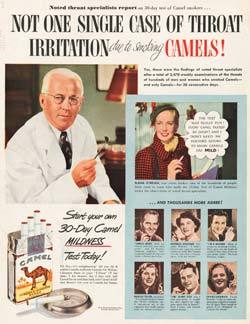
"Personal choice" is used to oppose the suggestion that foods and drinks with high sugar content should attract higher tax. Do those who feel it is unfair to apply high taxes to unhealthy products extend the same rationale to cigarettes and alcohol? The tax on cigarettes is enormous and yet I believe few non-smokers - or even smokers themselves - think it is unfair to tax this particular "personal choice".
Doctors say that obesity is now posing almost as much risk to health as smoking and that sugary drinks and foods containing high levels of sugar are the main causes of dental decay and obesity. It has been acknowledged that, whilst exercise is important, it can only slightly counteract a diet high in sugar. Given that is the case, in my view, rather than higher taxes being applied, there should be legislation to force manufacturers to cut down on the high levels of sugar, fat and salt in their products. But that is very unlikely to happen so taxes, coupled with an intensive education programme, seem to be the only options.
As to the original point raised by Anya, I think it is appalling that Coca Cola is involved in funding research projects relating to health, obesity, etc. Unfortunately, such conflicts of interest seem to be rife in all areas of research, including, as someone else said, pharmaceuticals. This perhaps explains why we get so many conflicting research reports, which have led to many people distrusting the advice that emanates from them .
Goodness me! This is probably a coincidence and I am not suggesting there is a any connection, but to have someone called Nestle making adverse comments on the business practices of Coca Cola, sounded a bit like pots calling kettles black. As Thatbags was thinking.
Perhaps a lot of the more "old money" government members have inherited from, or invested their money into the sugar industry. Even back into the days of slavery. That could explain them not wanting to tax sugar. Or that some of those in the industry are current government donors.
I think it's the straight unrefined sugars that have the worst effect on health. I think it's something to do with the different ways the body metabolises the sugars. Corn syrups are particularly bad.
mamie I am a Malcolm Kendrick fan
Wilma exactly and 
In the next 20 years sugar will rightly become regarded as a greater risk to public health than salt and fat. The campaign to highlight the truth about the amount of sugar in our food is only really starting to gain some momentum and it will be the biggest battle yet with the powerful food and drinks industry. One of the most serious barriers will be the backlash from the public from being told the current consumption rate of yet another thing is bad for us.
The whole subject of healthy eating needs revisiting so the next generation grows up able to cook healthy meals and is much less reliant on processed food. During the transition, it needs to be treated like smoking, so children learn about it at school and put pressure on parents to change.
.
GG please don't agree with me! The  won't do my heart any good
I wonder why people see taxing sugar as turning us into a nanny state. It is certainly one way to raise money - straight into the NHS would suit me - and it will not harm anyone if they have to avoid it and eat things containing less sugar. I can't see a problem as we tax petrol, tobacco, alcohol, etc. It might be nice to think that is done for our health but I would think it is just looked at as a source of revenue by the treasury.
From the health point of view I just remember being told all the good things tobacco could do for us 
I'm not sure how you work out that a 'sugar tax' would take away our personal choice, NTO. One could argue that a tax on cigarettes and alcohol takes away our personal choice.
Type 2 diabetes costs this country £1,000,000 per hour
That's £24,000,000 per day
That's absolutely mind blowing!!!
All taxes are compulsory and take away personal choice! I'd rather not pay VAT for example, or road tax, or TV licence
Registering is free, easy, and means you can join the discussion, watch threads and lots more.
Register now »Already registered? Log in with:
Gransnet »Get our top conversations, latest advice, fantastic competitions, and more, straight to your inbox. Sign up to our daily newsletter here.
