No, POGS, I don't nitpick. I stick to the point rather than imagining what has been written.
Will Labour backing rejoining be the “end” or the “making” of them??
Rejoice! Chancellor Healey Will Give Us Cheap Marmalade & Gherkins.
Sign up to Gransnet Daily
Our free daily newsletter full of hot threads, competitions and discounts
Subscribe
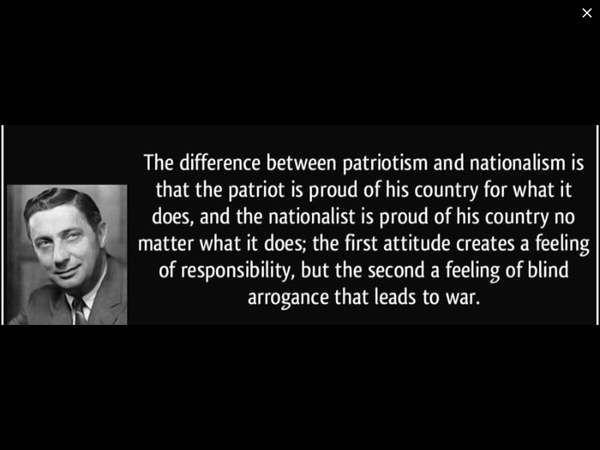
What these people have to say about Labour as it is now struck cords with me.
Peter Hurst (@peterleohurst)
'Blue labour types' right about 1thing: many trad Labour voters more conservative than many third wayers/centrists care to acknowledge.
2. That conservatism with a small 'c' includes things like loving the royal family and being proud of being British. Social dems might not
3. win via 'riding the tiger of nationalism' but they wont win via the old 'New' Labour formulation either. The 5 million voters lost
4. During the years 1997-2010 are not going to return to a party that is, in effect, the lib dems in drag Iain. prospectmagazine.co.uk/magazine/labou…
Lisa Muggeridge (@LisaMuggeridge)
I have noticed that Westminster does appear to believe that the only function of the north is to reliably vote Labour. And we don't now.
For as long as UKIP, the Labour left and fringe batshittery is the only alternative to Lab up here the Tories will clean up.
'Why would working class people vote Tory'. Because they cant vote Labour and the alternative is UKIP. In a nutshell.
One of the striking things about the left is this shock at working class tories, and working class people who dont want their revolution.
The photo is Hurst's Twitter profile. What it says seems well put too.
No, POGS, I don't nitpick. I stick to the point rather than imagining what has been written.
trisher
The point you raised in your post related to 'personalities , appearance and charisma'
I answered with regard to 'personalities, appearance and charisma'.
POGS I would oppose all of the people you quoted on the grounds of policy NOT personality
Boris Johnston,-Brexiter who lied and was fully aware of this
Michael Gove- ruined the school system in the UK with the promotion of Free Schools cutting funding to ordinary schools-
Trump racist who dislikes and discriminates against Mexicans and Muslims
Eric Pickles- began the conservative campaign to destroy local authorities
Jacob Rees Mogg -the true face of conservatism, advocates a low tax economy but manages to gloss over its effects such as the destruction of the NHS and the welfare state and the resulting descent into real poverty.
I actually think Rees-Mogg is quite charming and amusing, but his policies are revolting to me.
None of these have been attacked in the press with the same vehemence as Corbyn.
GracesGran your post of 14.36 - very interesting analysis/discussion.
DD
So what was trisher point in saying
And why it is so important to the Tory press that the focus be kept on personalities and not on policies. Could it be that we have entered the arena of personality politics where the appearance and charisma of a politician matter far more than the policies they espouse? If so we are entering dangerous territory.
I was making the point it is not the domain of the right wing press nor the domain of right wing posters. You do bladdy nit pick.
I agree with you absolutely, GracesGran. Rather than squabbling, the Labour Party should be coming up with a compelling alternative. They're not!
Did anybody claim it's the domain of right-wing politics?
This is classic 'whataboutery'!
For those not allergic to links, this blog from a former policy advisor to Gordon Brown is interesting:
medium.com/@theobertram/the-copeland-test-labours-core-vote-ddac4fb8ee#.j18mqx6vv
Labour has been losing its C2 (skilled working class) supporters for years. As both Thatcher and Blair knew, they're critical to electoral success.
Corbyn might claim to represent them, but they don't think he represents them. Whereas they couldn't vote for Cameron, because they thought he was a toff, they feel they can vote for May.
Once again, the message is that Corbyn hasn't caused the problem, although he's not solving it and is making matters worse.
This is a Labour Party problem, not just one of finding a new leader. It needs to decide what it stands for and sell that vision to the public. It won't do that with constant infighting, negativity and dwelling on the past.
" Tory press that the focus be kept on personalities and not on policies. Could it be that we have entered the arena of personality politics where the appearance and charisma of a politician matter far more than the policies they espouse? If so we are entering dangerous territory."
It is not the domain of only right wing politics is it?
Lord knows how many threads/posts that have been directed at the likes of Corbyn, Boris Johnston, Michael Gove, Trump, Eric Pickles, Jacob Rees Mogg etc.
Flipping heck those poor b----s really have had some awful , full of bile things said about their appearance and character.
DD it was what I have been thinking for some time and was really struck by the discussion. The sad thing is the LP could be using this time to work out what the 'new world' needs rather than infighting. The poor and needy are still with us; many still believe firmly in a mixed economy and worry about unfettered capital but what are we hearing about making this work for all? It is not surprising to see an old-fashioned move to the right but where is the thinking that approaches dealing with the new working ways and patterns so that all may benefit?
Nobodies laughing.
Corbyn a few minutes ago shook Gareth Snell's hand welcoming him as a Labour MP. ( I do hope there won't be a disingenuous photo of them 'holding hands!).
It was an obvious photo shoot/PR exercise but Corbyn refused to take questions , told the BBC journalist Norman Smith they were all rude and buggered off after a only a few minutes.
Perhaps he didn't want to be asked hard questions such as ' Mr Corbyn what do you think of Gareth Snell's tweets such as :-
“Diane, you are great, then you say something incredibly arsingly stupid.” (after Dianne Abbott appeared on behalf of Labour as a Cabinet Minister on Question Time)
OR
'We doing hyberbole? If so, it's a choice between IRA supporting friend of Hamas career politician Corbyn vs Smith."
Blimey, at least he is not afraid to air his opinions.
PS. The FT isn't owned by Murdoch. It was owned by Pearson, but now belongs to Nikkei.
POGS What are you going on about? The Observer and the Guardian are essentially the same paper, as are the i and the Independent. The Times is not centrist.
The Mirror is the only one of those papers with a mass readership.
It's more than personality with Corbyn. He doesn't appear to have leadership skills.
trisher I think you have a point about personality politics. It's really quite sad how little people seem to know or care about policies. It's even more surprising when the policies affect them. We're a nation of turkeys voting for Christmas.
GracesGran That's exactly what I've been saying. There is no agreed social democratic agenda in the UK (and elsewhere), because the old idea of a proletariat has gone. Political divisions are more nuanced and more to do with values than anything else. The values cut across traditional left and right divisions.
The Labour Party is essentially at least two different parties in one and they are drifting further apart. The current problems precede Corbyn and even Miliband. Corbyn hasn't caused the problems, although he's probably made them worse. He certainly hasn't solved anything, but he didn't cause them in the first place.
Getting rid of Corbyn won't solve anything in the short term either, because nobody can come up with a way forward.
That's why people like Ian Lavery and Jeremy Corbyn get laughed at. It's been personality politics since Blair's days.
When I see the Times described as "centrist" I know that somebody has completely different understanding of political terms to my own. The Times has only ever supported Labour in one election -Tony Blair's. It has been consistently a Tory paper otherwise.
As far as the Labour Party is concerned I have never viewed it as a solely working class party and I am well aware of elements in the working class which take right wing politics beyond anything the Tories now propose (although these were once considered acceptable). There is nothing sacred about working class people, some of them are racist, some are not, some are patriots, some are vehemently nationalist. The question we should be asking is why so many people will vote for a party that says all the right things but is obviously not the caring party it claims to be. And why it is so important to the Tory press that the focus be kept on personalities and not on policies. Could it be that we have entered the arena of personality politics where the appearance and charisma of a politician matter far more than the policies they espouse? If so we are entering dangerous territory.
I didn't, Annie. Read it again.
I have just been watching The Daily Politics and found a really interesting discussion on there (I imagine it's on iplayer)
Andrew Neil(AN) It is clear Labour have problems with Corbyn in Copeland because of the nuclear issue but actually what the people of Copeland think is broadly what the British people think. They're in favour of Trident and in favour of some kind of nuclear power provided it's not too expensive. So it's not just a Copeland issue but it's not just a Corbyn issue either. I would suggest Social Democratic parties across Europe and, indeed, including the Democrats in the United States, most of them are in trouble.
Rafael Behr(RB) It think that's absolutely right and I think John Woodcock's interview there was very interesting because it illustrated to me a couple of things. First, that people in the Parliamentary Party have learnt the lesson from last year when they went after Jeremy Corbyn, they attacked him after the European referendum because they were so frustrated and thought the leadership was dire. They essentially had one bullet in the chamber and they fired it off into the air and Jeremy Corbyn was still leader and what's more they antagonised a lot of the members who supported Jeremy and thought he was absolutely brilliant and he was their choice of leader and they wanted to keep him. What I thought John Woodcock demonstrated that is they have sort of understood that there are still members of the labour party who really want the Jeremy Corbyn project to work but also he understands that there is not much point in just removing Jeremy Corbyn if you don't address this broader of what does a party of the centre left do in the 21st Century, when all the industrial structures that have always supported the Labour Party for generations and labour movements across Europe and the nature of the economy, the nature of those structures have just changed so much. It is not obvious what a core social democratic constituency looks like any more. There is a sophisticated understanding of the problem now in the Parliamentary Labour Party, what there isn't is anyone who is really articulating what any answer is but they know that the answer isn't the on-going leadership of Jeremy Corbyn.
AN But they are not alone in that. The Greek socialist party has been pretty much wiped out; the Italian democrat socialist party, Mr Renzi's party is ripping itself apart at the moment; the French socialists are about to be wiped out in the presidential elections; the German socialist democrats may be given a new lease of life by the new candidate and Mrs Merkel is on the back foot but that seems more a change of personnel than a change of any kind of policy so British Labour is not alone in trying to work out what to stand for.
RB No, and although these are quite different jurisdictions there are quite common problems and one of them seems to be a big gap between what became the sort of - I hate this term – the sort of metropolitan liberal intellectual steering committee of the left and the sort of storm trouper basis, industrial working-class base that always drove the Labour movement forward through trade unions. Now you need that coalition of two different sort of constituencies to form power but culturally those two constituencies have drifted ever, ever further apart and from Ed Milliband's leadership into Jeremy Corbyn's leadership you sense that those two entities – the ties have frayed completely.
Jen, you said Corbyn is trying to do something about the press
Didn't say he could do anything to the press. He knows he can't. That's why he uses social media.
Times and Financial Times are owned by Murdoch, along with SKY and Fox news and TV, trumps favourite media. He really isn't centrist.
The Guardian has been LibDem for years.
What the devil does Corbyn think he can do to the press?
This discussion thread has reached a 1000 message limit, and so cannot accept new messages.
Start a new discussion
Get our top conversations, latest advice, fantastic competitions, and more, straight to your inbox. Sign up to our daily newsletter here.
