Quite Maizie. The FT reported this just two hours ago:
UK private sector activity deteriorated by the most in three years in November as uncertainty surrounding the general election and Brexit hurt domestic demand and exports.
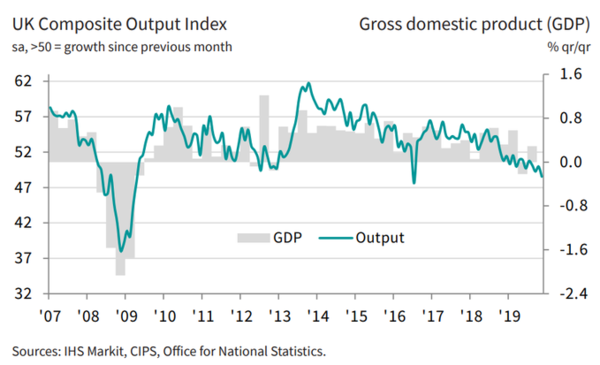
The “flash”, or preliminary, IHS Markit/CIPS purchasing managers’ index combining the services and manufacturing sectors came in at 48.5 — its lowest reading since July 2016.
“The decline signalled by the flash PMI follows stagnation in October and adds to what has been the survey’s worst spell since the recession of 2008-9,” said Chris Williamson, chief business economist at IHS Markit.
The flash PMI for services — which account for about 80 per cent of the economy — dropped to 48.6 in November, from 50 in October. This was below economists’ expectation of no change and below the 50 mark, which separates expansion from contraction.
The flash PMI index for manufacturing also fell, to 48.3 from 49.6 in the previous month, dragging down the composite index.
Activity in the manufacturing sector was affected by a sharp deterioration in export orders and a reversal of stock building following the passing of the October 31 Brexit deadline.
“The weak survey data puts the economy on course for a 0.2 per cent drop in GDP in the fourth quarter, and also pushes the PMI further into territory that would normally be associated with the Bank of England adding more stimulus to the economy,” Mr Williamson said.
The figures knocked the pound, with sterling down 0.3 per cent against the dollar at $1.2870 shortly after their release.
Respondents to the survey largely attributed weaker domestic economic conditions to a lack of clarity in relation to Brexit as well as added uncertainty because of the December 12 election.
The figures mark the first time Markit has published flash PMI indices for the UK. These are based on about 85 per cent of respondents’ data and published one week before the final reading.
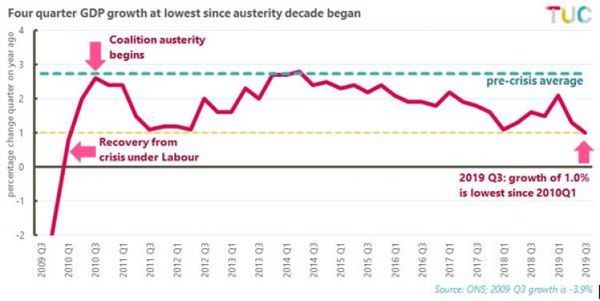
The PMIs are a measure of the health of private sector activity ahead of official output data. These latest figures point to economic growth deteriorating in the final quarter, after the UK’s gross domestic product contracted in August and September.
However, the PMIs, and other sentiment indicators, might excessively reflect the political uncertainties linked to the UK’s departure from the EU and the upcoming general election, economists warned.
Samuel Tombs, chief UK economist at Pantheon Macroeconomics, a consultancy, said: “The rate of GDP growth implied by the composite PMI . . . has been too low by an average of 0.2 percentage points over the last four quarters.”
Moreover, the services PMI does not include the retail and the public sectors. Data released on Thursday showed that government spending rose in the most recent month, which might help the sector’s output.
Despite those caveats, the overall picture remains gloomy.
“Even allowing for the fact that the purchasing managers’ surveys can tend to present an overly gloomy picture at times of heightened uncertainties, the November flash estimates do little to inspire confidence over fourth-quarter growth prospects,” said Howard Archer, chief economic adviser at the consultancy EY Item club.