Gransnet forums

Competitions

Now closed: Win one of 10 copies of Voices from the Second World War

(84 Posts)
KatGransnet (GNHQ) Mon 11-Apr-16 11:06:59

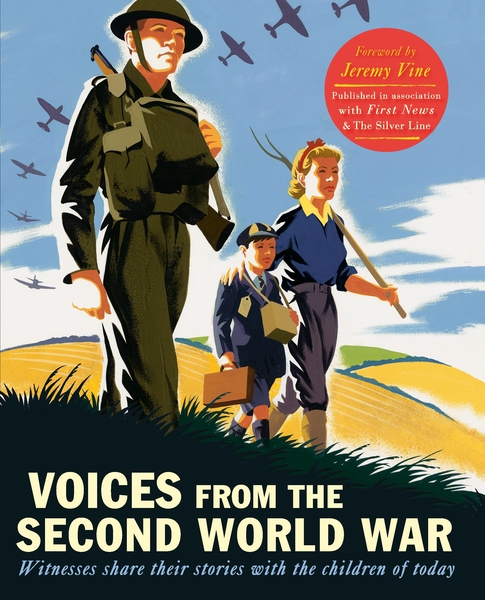
We've teamed up with Walker Books to give away 10 copies of Voices from the Second World War - a powerful and extremely moving collection of first-hand accounts of the war, published in association with the award-winning children's newspaper First News.

Over 80 survivors share their stories with the children of today so that their memories will live on and the lessons learned will never be forgotten. Contributors include a rear gunner who took part in sixty bombing raids, a Jewish woman who played in the orchestra at Auschwitz, a Japanese man who survived Hiroshima and Sir Nicholas Winton, who saved 669 children by setting up the indertransport program from Czechoslovakia.

Many of the interviews were conducted by children, for many of them the only chance they'll have to hear about the Second World War first hand. A portion of proceeds will go to support The Silver Line, Esther Rantzen's new charity providing support and advice to older people.

To win one of 10 copies of the book, share your family’s stories from the Second World War below on this thread before midday on 11 May 2016.

Voices from the Second World War is published by Walker Books and is available to buy on Amazon. Read the free extract here.

Worlass Sun 17-Apr-16 18:57:54

My Dad was in Burma during the War. My parents were married in 1941 and he went overseas shortly afterwards. I didn't get to meet him until I was four years old. I remember playing in the street where my Mam and I lived with her grandparents when I was called in and there was this strange bloke, who turned out to be my Dad.

grands Sat 16-Apr-16 16:54:13

My Mum was a youngster during World War II. She recalls her younger sister, was born during the Blitz.

Copperhead23 Sat 16-Apr-16 10:08:31

My father ran away to the navy as a boy aged 14 in WW1 and in WW2 he was in the army in charge of getting the tanks ready at Bovington camp. At home with my grandmother my mother and older brother were joined by evacuees as they lived in rural England. My late father in law worked on the Bombers as a an aircraft technician, my late mother in law used to make hairnets at home for the ladies to wear in the factories to keep their hair safe. All of these people contributed to the war effort in life changing ways.
I met a few years ago a lady and her husband who had been in Auschwitz, they had both lost their families , husband/wife and 7 children in all .This lovely couple both in their eighties met in Scotland at a sanatorium and eventually married. They had no anger in their hearts just forgiveness. My daughter learnt a lot in our weeks holiday listening to their life story.

LynnKnowles Fri 15-Apr-16 10:27:04

A friend of mine had a narrow escape as a baby in the war, in Bradford.
He had been left in his pram, overnight, downstairs.
Unfortunately a there was a direct hit on his home.
He, sadly, was the only survivor - his parents and brother died upstairs - he only survived because he was where he was. He was then brought up by his Grandparents.

durhamjen Fri 15-Apr-16 01:16:57

My father was in the army before the war began.
He was in the RASC, a despatch rider, taking messages on his motorbike.
He was at Dunkirk, then sent up to Hull when it was being bombed.
He had to drive a lorry into Hull and remove all the rubble from bombed buildings after the Luftwaffe had gone back home. Then the same the next day, etc. The British had actually built what looked like a town along the Humber, further out of Hull, hoping the Germans would think it was Hull and bomb there instead of Hull itself. It sort of worked, but Hull was the most bombed city during the war, so heaven knows how much worse it would have been if it wasn't for the decoy near Paull.

He was billeted in the same village where my mother lived in the schoolhouse, which was where they met.

Then he was sent to Nigeria to train West African troops, who were then sent to Burma to fight the Japanese. While he was out there, she trained to be a nurse.
He never talked about what happened in Japan, although later in life he joined the Burma Star Association so he could go along to meetings with others who had been there.
He was lucky, though, never got a scratch, apart from losing his front teeth when he fell off his motorbike, and getting malaria in Africa.

My husband's father trained in Chester to build bailey bridges. Then he went out on DDay and built them across rivers, so the tanks and troops could travel quickly. He wrote his story in a magazine for the miners, as he worked for the NCB after the war. He also had to clear mines, clear and repair roads. His company liberated one of the towns near Arnhem, and build a bridge over the river before a major parachute and glider drop. This was when he met Montgomery. The paratroopers were dropping in the fields behind them as they were building the bridge.

Envious Thu 14-Apr-16 12:28:09

My father never discussed the war till his later retirement when he decided to write a book called Remembrances. He self published it and sold copies and gave his profits to his church. He also went back to France and retraced his journey,visited the well kept War cemeteries and met many French people that still appreciated the U.S.'s help during the war. He also went to the D-Day celebrations as he had landed on one of the beaches himself.

harrigran Wed 13-Apr-16 11:29:35

My father was an ARP warden during the war, he worked in a shipyard during the day but donned his uniform as soon as he finished work. My sister was born in 1940 and my mother was left to care for her newborn baby in the Anderson shelter at the top of our garden. I was an adult before I realised how my father had risked his life crawling into a bombed house to rescue a woman who had hidden in the cupboard under the stairs because she was frightened to go into the shelter. He dragged her to safety on a door that had been blown off.
My father's cousin was the first person to die in an air raid in our town.

oznan Wed 13-Apr-16 11:00:52

My mom worked in a drapery shop,called The Scotch Wool Shop in Birmingham city centre,although the family lived on the outskirts of Birmingham.One morning,after a night of heavy raids over the city,she arrived for work to find the shop,along with a whole row of buildings,reduced to a pile of rubble.I have photos of the devastation that morning and can imagine the horror of the people finding their workplaces,shops and offices,gone overnight.
My mother then trained as a psychiatric nurse,so the war gave her an unexpected career change.Of course,she had to leave nursing when she married after the war in 1949 as married women did back then from many professions.
My father was in the Polish Resettlement Corps and he and my mother were pen pals who met up and fell in love.
How the war changed the course of life for so many,that is the lucky ones who survived it.

Dannydog1 Wed 13-Apr-16 10:07:23

I have just returned from my mother in law's funeral. In the service one of her sons retold one of her memories of the war. She was an evacuee along with her older brother, but they were split up and placed with separate families. Unfortunately she was not happy with the couple she was placed with and on her mum's first visit so so upset she managed to persuade her to take her home again. So her older brother was also taken home at the same time. Unfortunately her brother wasn't that impressed with the fuss his younger sister had made as he was having the time of his life with his couple!

nickamram Tue 12-Apr-16 22:41:44

My Grandad was in the Home Guard and had to sit on fire watch in tall buildings in Woolwich during the Blitz. I was told that having to do this with bombs and incendiaries dropping around him as the Germans tried to hit the docks and the Arsenal, caused him to have a nervous breakdown. This really surprised me as I knew him as the strong cornerstone that held our family together but just shows how traumatic war can be.

busterjames Tue 12-Apr-16 20:34:45

my late father loved telling me his war stories when he was a boy ,how they used to search for planes that had been shot down and see what they could find.He had a cupboard full of old bullets and general war stuff .It sounded so exciting but it was pretty scary stuff really !

annodomini Tue 12-Apr-16 19:56:54

The night before I was born, my mother was under my granny's kitchen table, listening to the sound of the bombers overhead, returning from the bombing of the Clyde shipyards. I was born on November 5th 1940, the date of FDR's third election as US president. Dad worked in a big explosives factory, as a research chemist, thus a reserved occupation which spared him the ordeal of conscription. The enemy tried to bomb 'the factory' and he watched the bombs falling; only one of which exploded, killing a swan. My family must be unique in having had none of my close relatives involved in the services. Two uncles were also in reserved occupations and my aunt worked in the office at 'the factory', presumably doing something indispensable to the war effort. In his spare time, my dad dug for victory and when I was big enough I 'helped' him in the garden. We lived well on vegetables he produced. He was also the captain of the local Home Guard. On May 8th 1945, I watched him leading his men on the VE Day parade and felt so proud of him. Throughout the war, my mum was making do and mending as well as cooking and preserving. When there were spare eggs (from uncle and aunt's hens) they were saved in a big white enamel bucket in a mixture known as 'waterglass'. A gentleman used to come round every so often with a big suitcase full of remnants, free of coupons. Mum made all our clothes or cut down garments outgrown by our older cousins. She was always a good dressmaker and needlewoman. Smocking little dresses for us was her forte.

I know I was lucky in having a relatively peaceful war, on the west coast of Scotland. Our local minister's wife ran a little playgroup in the manse; and another lady ran a pre-school in her own house where many of us learned to read, write and do arithmetic before we went to school. To cap it all, we had a most beautiful beach to play on too. Yes, we were a lucky family.

Lorelei Tue 12-Apr-16 19:45:13

My partner's grandad joined up planning to see the world - but ended up working on the Thames for the duration. My nan was a nurse and long after the war was over she still used to visit people she had known, those who had been severely injured etc.

franjo Tue 12-Apr-16 18:54:07

I was born in North London in 1942, a home birth and as there wasn't a cot avaiable a drawer was taken out of a chest of drawers and that was where I slept!

Liz46 Tue 12-Apr-16 14:44:54

My father was in the RAF training to be a fighter pilot before WW2 broke out. I have a letter from him to his mother on the day war broke out in which he says that he is not afraid as he has had the proper training but men joining later would probably not. This turned out to be very true.

He was with 46 Squadron who were sent to Norway. I have read a quote that 'The whole of the Norway Campaign was a grand, military cock-up'. The Germans were coming so the squadron and planes were put on HMS Glorious. Two men drew the short straw and had to stay behind to destroy equipment so the Germans didn't get it. One of these men was my father and he and the other man had to make their own way back. In fact they were lucky as Glorious was sunk and 1,519 servicemen were killed. It is said by some that many could have been saved but a nearby ship was rescuing the Norwegian Royal family so did not help rescue the men.

My father and the other man got a lift to Scotland on a fishing boat, My aunt accidentally found them mentioned in the memoirs of a Scottish landlady.

He than flew Hurricanes in The Battle of Britain and after that he became a flying instructor based in Scotland.

He is listed on the wonderful sculpture on the banks of The Thames.

pennwood Tue 12-Apr-16 11:33:01

My father fought in WW2 until he was injured when his leg was blown off. His life was saved by comrades putting him on the bonnet of a jeep & getting him to the field hospital. He was sent back to England to hospital, & my mother nursed him there in Sunderland, leaving her young son at home with her mother. When we were children my father used to tell us a more elaborate story of how he lost his leg, & how it had ended up 'feet away' standing up with the boot still on!

Marmight Tue 12-Apr-16 11:27:37

My late DH was born in 1941 and evacuated from Essex to Hastings, which in hindsight was probably not the best place to be..... He remembered the local cinema being bombed when he was around 3 years old and being taken to peer down into the crater. My Mum continued working in an American Bank in London throughout the war, and was co-opted into fire watching at night from the roof of the bank. She told of receiving parcels of goodies, like chocolate and nylons from the US. She married my Dad in February 1941 and 2 weeks later he left for Africa and then India and did not return until January 1946 - surprisingly their marriage lasted, happily, until she died in '97.

micmc47 Tue 12-Apr-16 10:44:54

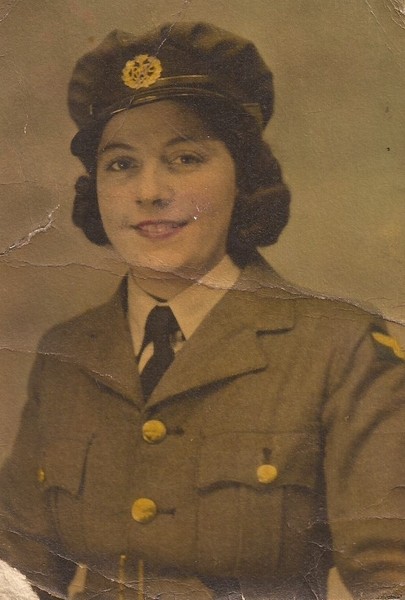
This tale accurately describes the experiences of my late Mother as a WAAF during WW2. I've written it in her local Geordie vernacular, so it comes with an Oxford English health warning. Every word is true. Hope you enjoy it... :-)

When me Mam was a WAAF.

Me Motha was a clever lass, if shuh’d been born teday,
So many more life chances would hev clearly come her way.
An’ as fer education, shuh’d have come oot at the top,
An’ hev gone te University, the cream o’ hor school’s crop.
But times were very diff’rent, an’ shuh had nee expectation,
So ended up in fact’ry whork, not much o’ a vocation.
When war broke oot, shuh saw hor chance te get away from there,
An’ volunteered te join the WAAF’s, an answer to hor prayer,
Te give horsel’ a better chance, te get an education,
While ahlso deein’ ahll shuh could for wor beleaguered Nation.
The Air Force saw shuh had a brain, an’ helped hor on her mission,
Thuh trained that lass, top o’ her class, an aircraft electrician.
Thuh posted her te Hemswell, a busy bomber base,
Where Lancasters an’ Wellingtons became hor forst workplace.
A grade one electrician, shuh supervised a “mate”,
But the lad shuh ended up with woz anythin’ but great.
A Welshman knahn as “Dinghy Dai”, te hor was passed on doon,
As nee-one wanted him aroond, a clumsy young buffoon.
He got his name from pressin’ buttons, such a careless trait,
An’ dinghys sittin’ in the wings would rapidly inflate.
Supposed te make the circuit safe, before he did his test,
He’d sometimes just forget to, even though he tried his best.
So workin’ on a Lancaster one windy Autumn day,
Me Motha in the cockpit, testin’ switches for the fray.
Shuh got te “Master Armament”, and shouted doon te Dai,
Te make the bomb bay bus bar safe, an’ he shouts back : “Why aye!”
So smilin’ at his Geordie, shuh tests that vital switch,
As lights ahll torn from red te green, shuh feels the aircraft twitch.
Shuh puts it doon te gusty winds, but then sees through the glass,
Some people who ahll run away, across the airfield’s grass.
“That NAAFI van’s come early, ah could use a cuppa tea,
Ah’ll finish up, then hev a sup, as quick as ah can be.. “
But shuh saw then in the distance, a line of people there,
Ah’ll wavin’ at hor madly with their arms up in the air.
As shuh climbed doon from that bomber, such a scary sight shuh foond,
A dorty great block-bustah bomb, just lyin’ on the groond.
As lang as three old dustbins, an’ if the fuse had fired,
There’d be no me, here tellin’ yee, as Mam would have expired.
An’ as fer Dai, wuh say bye-bye, on aircraft there’s nee room,
Thuh move him to the hangar with his very own bass broom.
So ah can say that still teday, me Mam’s the only WAAF,
Te drop a bomb on English groond, whey man yez hev te laugh…

Photograph above : My late Mother, Mary Ann Burns, age 19.

juliea333 Tue 12-Apr-16 10:30:30

My Mum was only 7 when the war began and even now at the age of 88 relives the nights she spent in the air rade shelter. She often told us the story of Christmas Eve when her Mum had bedded her down in the shelter with her little stocking hanging waiting expectantly for Santa to fill it. In the morning the stocking was empty because sadly their house and their neighbours had been bombed to the ground. No one was hurt in the blast but Christmas that year was 'cancelled' I very often think how scared she must have been

Nelliemoser Tue 12-Apr-16 09:04:44

My father was working as an engineer in a shoe machinery company when WW2 started. This company was turned over to precison machinery to producing rivets and other such stuff for planes and military eqipment.
My dad was deemed as being in a reserved occupation. When not at work he was put to fire watching and first aid duties.

tiggypiro Tue 12-Apr-16 08:28:49

My grandfather was a joiner and undertaker when the 1st WW broke out and he joined The Royal Air Corps. As a joiner he was building the planes and to make sure they were built correctly and safely he had to go on the test flights.

During the 2nd WW my father was a farmer and so not called up but my mother was a theatre sister in a hospital helping to patch up injured servicemen. Her brother was in the army and while in North Africa got sand fly disease. Complications from that were what he died from a few years later.

None of them talked a great deal about what they did or saw.

cluckyhen0 Tue 12-Apr-16 08:06:47

My Gran wrote a lovely true story about the war through a childs eyes when I was doing my GCSE history assignments. I still have it now although I unfortunately no longer have my Gran. She often told us tales of Uncle Arthur - her brother whom unfortunately not came home. She told me no one knew where he was buried, just a war grave in Germany. As an Army family we lived in Germany for 8 years and we did find Uncle Arthur and pay our respects - and let his only suffering sibling know and sent pictures for her. My Grandpa on the other hand was only concerned that a stray bomb landed on the chip 'ole. Of all the god damn places! He was exempt from fighting due to ill health and only having one lung so he worked in a munitions family - and my Great Grandad was Signals - ensuring that towns knew the bombers were on the way although he wanted to fight but couldn't due to a Mustard Attack in WW1

rockychip Mon 11-Apr-16 23:07:22

My grandad was a fireman in the war and he and my gran went to the cinema one evening when the sirens began in the middle of the film. Everyone rushed out but the cinema took a direct hit and my grandparents were caught in the blast. They had minor injuries but my grandad recognized some of his colleagues and helped to rescue some of the injured people. He told me he never set foot in a cinema again.

Annie29 Mon 11-Apr-16 21:16:15

Both my father and father in law were serving in the army during WW 2. Neither of them said very much about what they had seen or done. It was obvious that the memories were not good and they tried to forget what must have been an horrific experience .

lefthanded Mon 11-Apr-16 19:00:23

My father was a regular soldier who joined up in 1933 aged 18. He served in pre-partition India from 1935-38 but was recalled to the UK in 38 due to the threat of war. In October 1939, during the period known as the Phoney War, he was injured in a motorcycle accident whilst on night manoeuvres and consequently was unable to join his regiment which was sent to France as part of the BEF, and many of whom remain there still.

As a regular (rather than a conscript) he was not invalided out, but remained in the army on non-combatant duties. In June 1944 he was re-classified as fit for active service and entered France with the Light Infantry on D-Day +6. His unit was involved in several "skirmishes", and he ended up in Lille (having walked all the way from Arromanches, he says) when the war ended.

He is still alive today aged 101, and in good health apart from failing eyesight.