
ANA, read again, I said 8% in the 60's (1967). As you rightly say they rose steadily to peak at 14% in the 80's.
So Harry and family are coming back!


This Morning agony aunt, Denise Robertson, worries for the 'live in' generations forced to return to their parents' houses, and those younger people who simply don't have the prospect of owning their own homes. She wonders how the government will put an end to phenomenal house prices and help young people to achieve the dream of owning the roof over their head.
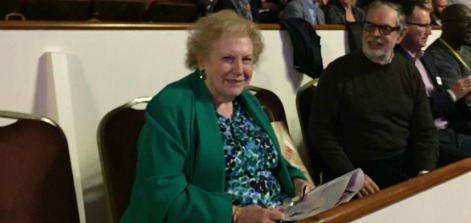
Denise Robertson
Planning my first marriage to Alex Robertson in the sixties, it never occurred to me that we wouldn't be able to own our own home. That first house was a pretty semi-detached with a lovely garden in a nice street. It cost £2,200 - well within my Merchant Navy husband's reach. We were utterly happy there. Money was tight. I cut old A-line dresses into the new straighter shape to save buying new, but we managed. Last time this house was for sale, in 2013, the asking price for it was an incredible £190,000. Thankfully my five sons were all able to get onto the property ladder but what will happen to my grandchildren?
If house prices rise in the next 30 years as they have in the last 30, the average UK home will be worth £1.2 million. The chronic shortage of housing is fuelling that rise. We currently only build half the number of homes we need. How will my grandchildren manage? There is no certainty for them. Although they are all hard-working at school or in jobs, I worry for our future generations.
Research from the National Housing Federation shows the income of the average first-time buyer today is nearly double that of an average first-time buyer in the early 1980s after accounting for inflation. And the deposit required today (£30,000) is almost ten times the deposit required in the early 1980s (around £3,000) also after accounting for inflation.
The one thing the politicians can do is make sure there are enough houses to go round. That will put an end to crazy prices and bring back that dream of all newly-weds - a home of their own. Just like I had.
And yet, what is more important to family life than a secure, affordable home? I've lost the roof over my head twice. The first time I was three months old. My elder sister, Joyce, Mum and Dad were living in Sunderland. Our lovely house was repossessed because my father's business had crashed. Most of our furniture was taken by the bailiffs. I have a little chair which they didn't take as my mother had been sitting on it. It's a symbol to me of how our family kept going. Thankfully we were given a council house, three bedrooms and a pleasant garden, where I grew up very happily. We were poor but our house was full of love. My parents adored each other.
The second time, I was 40 years old, the mother of five and this time it was my husband's business which had failed. Our bank manager loaned me, a struggling freelance writer, two thousand pounds as a deposit on a vandalised terraced house. The front window was boarded up but that house was our salvation. Over time we did it up and made it a comfortable home, but imagine the situation now. Neither of those lifelines exist today. My family would either be put on a long waiting list for social housing and be given either a B&B or a grotty private rental. As a harassed and busy mother of five, there's no way in the circumstances I was in that I'd get an advance of tens of thousands as a deposit, which is what you would need today. It would be too big a risk.
I've been the agony aunt for This Morning since the first programme in 1988. Every week, at This Morning or my other columns, I hear from people in fear of losing their homes. That's if they have one! Too many are living in sub-standard private rental accommodation, even, in one case, existing in the back seat of a car. What do I say to the veteran of several tours in Iraq and Afghanistan who bought a house ready for leaving the Regular Army? He was confident he'd walk into a job on release but there were no jobs. He couldn't keep up the mortgage and now he, his wife and four children are destined for the street. Heart breaking.
Too many young couples are 'living in' with parents in order to save for a deposit. Peoples' housing needs are individual and need individual solutions, as I well know. I support the Homes for Britain campaign to bring an end to the housing crisis within a generation. The one thing the politicians can do is make sure there are enough houses to go round. That will put an end to crazy prices and bring back that dream of all newly-weds - a home of their own. Just like I had.
Homes for Britain is a campaign calling for the end of the housing crisis within a generation. For more information and ways to get involved visit their website.
By Denise Robertson
Twitter: @HomesforBritain
ANA, read again, I said 8% in the 60's (1967). As you rightly say they rose steadily to peak at 14% in the 80's.
Mine was 14% in the 80s, but I wasn't aware they'd risen that high in the 60s.
Trisher, well aware of that. I lived in East London, I doubt we could have bought anything that was habitable on my salary, hence we moved out to where we could afford a house, even the one we bought was a wreck as it had been unoccupied for 3 years. Even then if you wanted to buy it meant moving to a cheaper area.
No one has mention the astronomical interest rates on mortgages in the 60's. Ours started at 9% and rose to around 14%
50 years ago my Dad was offered a large house in Shepherds Bush for £350, it was in 3 flats. One was empty the others had elderly tenants.
He turned it down because the roof was not in good condition! Oh the gift of hindsight! x
pompa 50 years ago there were affordable properties in London if you were prepared to take a risk. Of course they were in what were then 'dodgy' areas and many people, especially families were not prepared to do this. Some people did- a friend bought a property in what was then seen as a run down part of London and sold it a few years ago for over 1 mill. Where was it? Notting Hill! Now there aren't even those
I discussed this thread with our daughter, all of her friends are buying houses (as are our sons friends). She pointed out that whilst we would have bought houses in our early twenties, most of her friends have not bought until they are 25-30. Graduates by this time should be earning a good salary sufficient to get a mortgage on a starter home. Certainly both our children are earning far more than I ever earned even allowing for inflation, it would have been a waste of their studies and fees if they weren't capable of earning such a salary. I would certainly hope that any graduates would have more than £55 as a joint salary by the time they are 30.
I have only spoken about graduates as they were being discussed earlier and I no personal experience other than that. Also, neither of our children could have afforded a property in London (not that they wanted one), even 50 years ago we had to move out of London to be able to afford to buy.

I haven't said anything is affordable? 
I have read everything in this thread.
I am not having the derail stuff said again. gransnet HQ are happy, so it is a non argument.
Riverwalk, you appear not to have read dj's link. The £55k bit is in there.
Plus, I think what youmean by affordable, and what I mean by affordable are two different things.
I meant, and I will repeat, is that if you are earning £55k, then the mortgage is affordable.
I agree with your post GillT57.
You said it was affordable - explain how.
I haven't mentioned people who are not on 55,000 and it's nothing to do with having to work hard - so stop trying to de-rail the gist of what we are discussing.
Er, why would I want to provide you with a breakdown of figures - you're the one who's saying it's affordable?
On what do you base that assertion on someone earning 55,00 gross?
soon undoubtedly there are some fortunate people being paid these sort of salaries, but my DD as a newly qualified teacher on current starting salary of just over £22,000 will not be in the queue for a mortgage.
You have to be prepared to work hard though.
Or do you mean that most first time buyers are not on £55k, and that is not realistic for most? In which case I agree.
No. But I do know some London figures. And people who have that sort of mortgage. They used a family friend financial advisor, who went through all their figures with them.
If you want to provide me with a breakdown of figures, that would be good. Plus people who earn those sorts of figures, tend to be reliable and do their figures and their homework first. Very much so.
So I cant see why it isnt affordable, and why you are saying that it is not. Are the figures scaring you?
How is it affordable soon?
Have you worked out what the repayments would be out of net income?
I read the link. The first time buyers have gross income of £55k. And were lent 3.86 multiple or whatever the exact figures were. So affordable I would have thought?
Going back to the OP, mortgage lending in London has gone down by 16%.
However, first time buyers are still taking out an average of over £235,000.
How can they afford that?
www.politics.co.uk/opinion-formers/council-of-mortgage-lenders-cml/article/london-house-purchase-lending-down-16-year-on-year-in-first
I am going by the schools around here, durhamjen. When the last head of music died at DBH's school he had to take it over temporarily, and interview the applicants. They had hundreds of applications, all had been made redundant because the department had been downsized and dumbed down. One said that when the electric piano died in his school, they refused to replace it. Maybe different economies are made in different areas. Local primary schools are bringing instrument peris in one day a week, and the parents have to pay rather than drive them miles away for lessons after school. The form teachers are expected to organise any events. Which is back to how it used to be, isn't it.
I feel for your son and for you. The course he is on doesnt seem to meet his needs.
I hope the change of course works out.
Not true. He has taught kids who are now in the Guildhall School of Music.
He teaches woodwind and brass instruments, and all kids compose their own music. He wishes there were more students taking music, but that has always been the case.
The trouble is, so few schools do music now. Percussion, some guitar, that's it. He would hate that.
My son did a degree in music and ended up being a music teacher. His friends did courses in audio and lighting technology and they are more involved in the practical world of music than he is. He's often wished he'd changed courses.
That's the problem - he doesn't do cheek and self-advertising. He does quiet and ironic and dry.  He isn't at all pushy. He does push to a point, he lacks self-consciousness, but is too polite for today, I think.
soon it's a new course, composing for film and gaming, but he says the tutors are some years behind and still trying to get them to make music from bottles filled with water and children's squeaky toys, when everyone knows that all that is needed is a good computer with the right software and a sound knowledge of music. Some of the modules have been fine, others are dated. I feel for the tutors. He says he would be better off learning from the technical support guy!
He wrote this one night when he couldn't get to sleep.
soundcloud.com/mooglemusic/anthem-for-no-sleep
janerowena, so a computer course could be a good partnership with his music studies. Getting a job in a particular sector is all down to perseverance and cheek, you just have to keep banging on doors.
Sorry. If you dont mind me asking. Those questions are a bit intrusive.
Registering is free, easy, and means you can join the discussion, watch threads and lots more.
Register now »Already registered? Log in with:
Gransnet »Get our top conversations, latest advice, fantastic competitions, and more, straight to your inbox. Sign up to our daily newsletter here.
