
Our first house was £2,500 at a time when DH was earning £950 a year as a new graduate. Two and a half.
Isn't it funny how toilet roll has changed over the years?


This Morning agony aunt, Denise Robertson, worries for the 'live in' generations forced to return to their parents' houses, and those younger people who simply don't have the prospect of owning their own homes. She wonders how the government will put an end to phenomenal house prices and help young people to achieve the dream of owning the roof over their head.
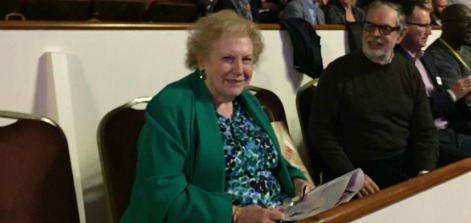
Denise Robertson
Planning my first marriage to Alex Robertson in the sixties, it never occurred to me that we wouldn't be able to own our own home. That first house was a pretty semi-detached with a lovely garden in a nice street. It cost £2,200 - well within my Merchant Navy husband's reach. We were utterly happy there. Money was tight. I cut old A-line dresses into the new straighter shape to save buying new, but we managed. Last time this house was for sale, in 2013, the asking price for it was an incredible £190,000. Thankfully my five sons were all able to get onto the property ladder but what will happen to my grandchildren?
If house prices rise in the next 30 years as they have in the last 30, the average UK home will be worth £1.2 million. The chronic shortage of housing is fuelling that rise. We currently only build half the number of homes we need. How will my grandchildren manage? There is no certainty for them. Although they are all hard-working at school or in jobs, I worry for our future generations.
Research from the National Housing Federation shows the income of the average first-time buyer today is nearly double that of an average first-time buyer in the early 1980s after accounting for inflation. And the deposit required today (£30,000) is almost ten times the deposit required in the early 1980s (around £3,000) also after accounting for inflation.
The one thing the politicians can do is make sure there are enough houses to go round. That will put an end to crazy prices and bring back that dream of all newly-weds - a home of their own. Just like I had.
And yet, what is more important to family life than a secure, affordable home? I've lost the roof over my head twice. The first time I was three months old. My elder sister, Joyce, Mum and Dad were living in Sunderland. Our lovely house was repossessed because my father's business had crashed. Most of our furniture was taken by the bailiffs. I have a little chair which they didn't take as my mother had been sitting on it. It's a symbol to me of how our family kept going. Thankfully we were given a council house, three bedrooms and a pleasant garden, where I grew up very happily. We were poor but our house was full of love. My parents adored each other.
The second time, I was 40 years old, the mother of five and this time it was my husband's business which had failed. Our bank manager loaned me, a struggling freelance writer, two thousand pounds as a deposit on a vandalised terraced house. The front window was boarded up but that house was our salvation. Over time we did it up and made it a comfortable home, but imagine the situation now. Neither of those lifelines exist today. My family would either be put on a long waiting list for social housing and be given either a B&B or a grotty private rental. As a harassed and busy mother of five, there's no way in the circumstances I was in that I'd get an advance of tens of thousands as a deposit, which is what you would need today. It would be too big a risk.
I've been the agony aunt for This Morning since the first programme in 1988. Every week, at This Morning or my other columns, I hear from people in fear of losing their homes. That's if they have one! Too many are living in sub-standard private rental accommodation, even, in one case, existing in the back seat of a car. What do I say to the veteran of several tours in Iraq and Afghanistan who bought a house ready for leaving the Regular Army? He was confident he'd walk into a job on release but there were no jobs. He couldn't keep up the mortgage and now he, his wife and four children are destined for the street. Heart breaking.
Too many young couples are 'living in' with parents in order to save for a deposit. Peoples' housing needs are individual and need individual solutions, as I well know. I support the Homes for Britain campaign to bring an end to the housing crisis within a generation. The one thing the politicians can do is make sure there are enough houses to go round. That will put an end to crazy prices and bring back that dream of all newly-weds - a home of their own. Just like I had.
Homes for Britain is a campaign calling for the end of the housing crisis within a generation. For more information and ways to get involved visit their website.
By Denise Robertson
Twitter: @HomesforBritain
Our first house was £2,500 at a time when DH was earning £950 a year as a new graduate. Two and a half.
Just Googled the average first time house = £160k
What we need to compare is the average price of a starter home, the overall average price is weighted by the higher end of the market, which is not for many first time buyers.
An article dated 19 May 2015 shows the average house price here in N. Ireland is £145,000, for a semi in our local area it is around £120,00.
Still below the values pre the 2007 recession.
My son bought his house before meeting his long term girlfriend who has now lived with him for 3 years. They cannot get joint names onto the property and officially share a mortgage because he is £30,000 in negative equity. He would need £30k as a deposit for them to take out a new joint mortgage.
Google tells me the average UK price is £273,000
with £284,00 being the average in England.
Your figures are out of date, soontobe. Try googling again.
I thought that the average house price is £180,000, and average wage £24,000. But either way houseprices have exploded.
I also thought that it is credit expansion that has caused all this. Banks being allowed to lend far more money than they could in 1979[something to do with Thatcher changing things in the 1980's hence the money money era?].
Same result whether you are right or I am Elegran.
My parents-in-law reckoned that their house cost them the same proportionately as ours did, so the market stayed much the same from that generation to ours. It is since then that it has risen.
Fifty years ago, the average house price was £3,160 and the average weekly wage was £18 (£960 annually) so a house cost about three and a half times average earnings.
The average house in the UK now costs £272,000. and the average annual wage is £26,500. So the average housebuyer buys a house at over ten times what they earn. If there are two people in full-time work, it is about five times their combined earning power.
In 1963, when we bought our first house, a wife's earnings were not taken into account for a mortgage - it was still thought that she would start having children and stop earning. Then banks noticed that there was such a thing as the pill, and began to lend on two salaries. From that point on, house prices rose, as more couples could afford to bid higher prices, and so prices rose to accommodate them.
Gender equality in borrowing has led to increased spending power on housing - and the free market has meant that prices increased accordingly.
That should be 3x more than they were compared to decades ago.
I worked out sometime, that houseprices now are roughly 3x the price relating to average salary , than they were a few decades ago.
The problem has come, if you ask me, that banks lent the extra cash, so houseprices could go up. Not as simple as that, but roughly.
So now the country is becoming in two halves. Those that manage to get together the deposit, and those that dont.
One of mine has managed it, with help. Two of my kids are not in the UK, so I have no idea yet, how that is going to pan out.
Another lives in an expensive area, again, no clue what is going to happen.
I used to think that house prices would crash. Not sure now. So if it comes to it, I think I will persuade my lot to save every penny for a deposit.
And I welcome any advice that posters like pompa can give.
We married in 1963 when we had both finished our degrees or training courses, aged 25 and 24, and had both worked for a year at starter salaries. I had managed to save the princely sum of £80 toward the mortgage deposit. I forget what DH had saved, but it came nowhere near covering what was needed. My parents-in-law helped us, or we would not have been able to afford our tiny one-and-a-half bedroom semi bungalow in deepest Midlothian.
The mortgage was for two-and-a-half times DH's annual salary. Mine was ignored, just as well because within a year I stopped work to have DD1. After another eighteen months we had DD2 and were looking for something a bit larger. We found something in Edinburgh and again were mortgaged right up to the hilt and beyond. Budgeting was tight. I remember DD1 coming home from school to say that a friend had a Zoo membership, and could she have one. It was £1 a year. I had to say no.
Trisher, you have no knowledge of my financial situation when we were trying to save for a deposit, so you can't comment on how hard it was for us.
But for your information I was 19 and still an apprentice and on an extremely low wage. I was still an apprentice when we got married, I did not start earning anything like an average wage until I was 23.
But the struggle you had is as nothing compared with what young people are undergoing now. Facts and figures on prices and wages
uk.finance.yahoo.com/photos/how-much-uk-house-prices-have-really-risen-slideshow/1960s-house-prices-photo-1917234467.html
Exactly my point Trisher. It is difficult early on, but essential if you want a reasonable pension, rock and a hard place. I had no choice but to find the money (and we were struggling to save for a deposit) as it was a compulsory company scheme that was taken at source, 5% if I remember correctly.
It seems rather odd to me to be talking about putting money into pensions when the OP was about young people who can't afford to leave home. If they do save enough for a deposit, and get a mortgage they struggle to repay, where on earth are they going to find the money for a pension?
It's even harder for children now, as company pensions schemes are no where near as good as when I paid into mine. This is when buy to rent comes in, it seems a good way to provide an income in retirement as property tends to be inflation proof.
Good advice pompa. I just emailed one of my daughters about it, because of your post. 
Very true Pompa, but some don't want to even think about it.
Many people do not start making provision for their pension early enough, they leave it until they can envisage become retired. Luckily I was forced to join a company pension scheme when I was 21 and continued to pay into a fund for the rest of my working life, increasing my payments considerably from the age of 25 onwards. Hence I have a reasonable pension, that would support rental and when I die, still provide a reasonable pension for my wife. It was expensive and a drain on our income, but very worthwhile now.
I do keep beating my kids up to sort out their pensions.
Unfortunately, if you don't start early, there is not much to be done.
If renting is done as abroad, then penions may have to be very much more generous, or else some sort of scheme in place, to enable many more people to be able to afford to rent when they no longer work.
In Britain renting is seen as a poor option, whilst in many countries it is the norm. There are advantages to rental, low capital cost, freedom of movement, low maintenance etc. Whilst rental costs in major town centres is very high, so is purchase.
It has, in my living memory been necessary for young people to move to cheaper areas initially even if it means changing jobs. All of our friends moved out of London when they got married because it was too expensive.
We have been looking at renting in Leicestershire and don't see extreme rates in the areas we have viewed.
House ownership is a relatively modern thing, both our parents rented for most of their lives as did many people post war.
Perhaps very high interest rates on buy to let mortgages and limit the number of properties people can own. Wishful thinking? There is good debt and bad debt. Good debt is student loans to produce a better future. Bad debt is to buy unnecessary holiday or newer car.
When you get a lot of people moving into the same place at the same time they create jobs and a new society in that area. They are about as self-sufficient a society as you can get.
This is the part I am responding to. The jobs are being taken from elsewhere, and work taken from elsewhere.
Some examples.
Garages. People live in newtown and now have their vehicles serviced in newtown. But when they lived elsewhere, they had their cars serviced elsewhere.
When their child goes to newtown school, they previously sent their child to a school elsewhere.
When they shop in the corner shop , they previously gave their custom elsewhere.
When we lived in Paterborough, it was taking people from London, to work in the factories that were being built. However, they did choose to come; they were not forced out because they could not afford the rents.
Peterborough was like that, J52, except it was built up round a city. The newtown part had its own centres for shops and schools.
I do not think London could ever be compared to any other part of the country, soon. That is a ridiculous example. It does not take people from other areas because they cannot afford to live there. In fact the councils are forcing people out of London.
dj - think of London. Obviously not a new build! But it could be said that it is self sufficient.
In reality it is taking jobs and people from other areas.
Registering is free, easy, and means you can join the discussion, watch threads and lots more.
Register now »Already registered? Log in with:
Gransnet »Get our top conversations, latest advice, fantastic competitions, and more, straight to your inbox. Sign up to our daily newsletter here.
