
Gransnet forums

News & politics

The Tories are in sight of their goal aren’t they?

(183 Posts)
Whitewavemark2 Fri 30-Dec-22 16:41:18

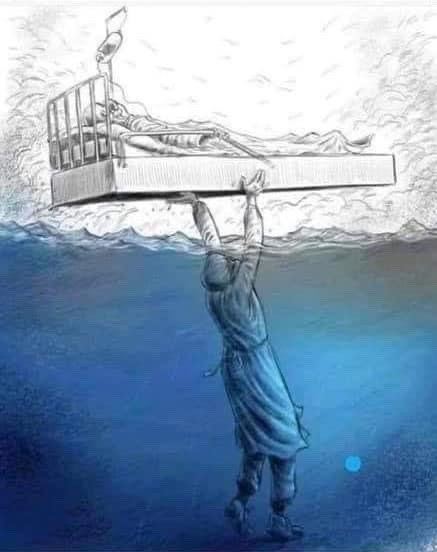
The new Banksy.

DaisyAnne Sun 01-Jan-23 16:33:48

Casdon

I’m au fait with the setting up of the NHS, I worked in it for over 40 years, and live about 20 miles away from Tredegar, where it all started so it was imbued in me from an early age. I don’t disagree with what you’re saying, the NHS and the rest of the welfare state were very ambitious and took a huge leap of faith. Having worked in the NHS since the 1970s though, I can promise you that the services delivered have radically changed since the NHS was set up. Vaccination programmes and childhood and employment health checks were necessary, and still are - but there wasn’t the same ‘cure all’ approach then. If you had cancer for example, surgery was the only option. If you had dementia, you were either looked after by your family or placed in a ward in a psychiatric hospital with thirty or so other sufferers -and so on, for virtually every condition. The world has moved on.

If you were told you had a bottomless purse, Casdon, what one thing would you do in the NHS?

Casdon Sun 01-Jan-23 14:23:18

Glorianny

^If you had cancer for example, surgery was the only option.^
That's simply untrue. Radiotherapy was used in the late 19th century and chemotherapy began in the 1960s

The hospitals which accommodated dementia and mentally ill patients were self supporting communities with their own farms and market gardens. Patients were in wards but there were also huge grounds with sports facilities. Most wards were not locked and patients could use the facilities. Not saying it was ideal but homes with single rooms aren't all that much better with people confined to overheated communal rooms.

Radiotherapy was not widely available in the 1940s. It was only in 1937 that doctors and scientists at St Bartholomew's Hospital began using the first system that could deliver high-energy X-rays, providing improved treatment of deep-seated tumours.

I worked in a psychiatric hospital as a trainee in the 1970s, and patients with severe dementia were kept together on (usually locked) wards, the hospital itself was a self contained community (asylum), but unfortunately people with dementia weren’t part of the wider hospital community, the hairdresser for example went to their wards, and they didn’t wander freely as other patients did. This was typical, I’m not criticising the staff, it was an impossible task, but it was largely a babysitting service. I was an innocent, and it really upset me at the time.

Glorianny Sun 01-Jan-23 13:57:38

If you had cancer for example, surgery was the only option.
That's simply untrue. Radiotherapy was used in the late 19th century and chemotherapy began in the 1960s

The hospitals which accommodated dementia and mentally ill patients were self supporting communities with their own farms and market gardens. Patients were in wards but there were also huge grounds with sports facilities. Most wards were not locked and patients could use the facilities. Not saying it was ideal but homes with single rooms aren't all that much better with people confined to overheated communal rooms.

growstuff Sun 01-Jan-23 13:51:55

Witzend

Either taxes have to rise, or at some point both people and political parties will have to accept that ‘free at the point of use’ is no longer viable.

Other European countries, whose healthcare systems are so often praised as being so much better than ours, do make small charges at point of use. Except that it’s such a sacred cow here, I really don’t see why we can’t.
Better, surely, than privatisation?

Because the amount it would raise would be peanuts and there's no guarantee it would cover the costs of administration, especially as some people would have to be exempt, as they are from prescription charges.

Katie59 Sun 01-Jan-23 12:02:39

“I have said continually that the amount which could be spent would only be limited by the resources available to spend it on. Growstuff quite rightly illustrated this by pointing out that the NHS is short of a vital resource which cannot be rapidly replaced, i.e people to fill the 100,000s of vacancies. “

Is this the way they plan to limit the cost of the NHS - no staff no treatment!.

MaizieD Sun 01-Jan-23 11:39:12

Casdon @ Sat 31-Dec-22 17:39:23

No government of any persuasion will ever allocate a limitless pot to health though, I’m sure you can see that, and see why?

I agree that any government with the same ideology as our current one wouldn't allocate a limitless pot to the NHS.

This is not because they think they can't do it. They very clearly can allocate any amount of money that they care to to anything they want to allocate it to. Most conspicuous modern example is the allocation of £37billion to the Test, Track and Trace initiative in 2020. There was also funding for vaccine development and for the vaccine roll out, £billions for PPE contracts, particularly through the illegal VIP lane, and the furlough payments and support for businesses. None of which has, in actual fact, come out of any budget allocation, or cost 'the taxpayer' a penny. Nor should it cost 'the taxpayer' anything, though the government will make it a convenient excuse for increasing taxation and cutting services.

Governments have done this at other times, too. Silently committed to limitless spending when they felt the need to do it.

I have said continually that the amount which could be spent would only be limited by the resources available to spend it on. Growstuff quite rightly illustrated this by pointing out that the NHS is short of a vital resource which cannot be rapidly replaced, i.e people to fill the 100,000s of vacancies.

Resource availability should influence spending, not ideology or myths about the country having a finite amount of money.

Casdon Sun 01-Jan-23 11:25:28

I’m au fait with the setting up of the NHS, I worked in it for over 40 years, and live about 20 miles away from Tredegar, where it all started so it was imbued in me from an early age. I don’t disagree with what you’re saying, the NHS and the rest of the welfare state were very ambitious and took a huge leap of faith. Having worked in the NHS since the 1970s though, I can promise you that the services delivered have radically changed since the NHS was set up. Vaccination programmes and childhood and employment health checks were necessary, and still are - but there wasn’t the same ‘cure all’ approach then. If you had cancer for example, surgery was the only option. If you had dementia, you were either looked after by your family or placed in a ward in a psychiatric hospital with thirty or so other sufferers -and so on, for virtually every condition. The world has moved on.

Witzend Sun 01-Jan-23 11:23:00

Either taxes have to rise, or at some point both people and political parties will have to accept that ‘free at the point of use’ is no longer viable.

Other European countries, whose healthcare systems are so often praised as being so much better than ours, do make small charges at point of use. Except that it’s such a sacred cow here, I really don’t see why we can’t.
Better, surely, than privatisation?

Glorianny Sun 01-Jan-23 11:13:45

Casdon

Glorianny

It is funny though when you think about it, our parents and grandparents in 1947 probably had considerably less wealth and were paid much less, but didn't think it would be an impossible task to fund care from the cradle to the grave. Medicine at the time was still dealing with TB and other deadly infectious diseases. Glasgow had over 2000 TB cases.
api.parliament.uk/historic-hansard/commons/1949/jul/07/tuberculosis-glasgow
But they managed. It really is about the will to do it.

Men died at 65 on average, and women at 72 in the 1940s, and they didn’t predict the impact of increasingly life expectancy, or the advance of medicine and technology on the cost of the NHS. How could they? I agree where there’s a will there’s a way, but services, and public expectations have changed dramatically in the last nearly 80 years.

But health at the time was really poor. TB cases were just beginning to get drug treatment, but many still had long term hospital stays.
Besides treatment there was comprehensive health care from birth which involved regular health checks, for children and adults who worked with them. When I went to training college we had to have a medical examination and a chest x-ray. All those extra facilities have been abolished. It would have been so easy to look at things then and say "We cant afford that, there are too many sick people,"

DaisyAnne Sun 01-Jan-23 10:12:23

Casdon

Glorianny

It is funny though when you think about it, our parents and grandparents in 1947 probably had considerably less wealth and were paid much less, but didn't think it would be an impossible task to fund care from the cradle to the grave. Medicine at the time was still dealing with TB and other deadly infectious diseases. Glasgow had over 2000 TB cases.
api.parliament.uk/historic-hansard/commons/1949/jul/07/tuberculosis-glasgow
But they managed. It really is about the will to do it.

Men died at 65 on average, and women at 72 in the 1940s, and they didn’t predict the impact of increasingly life expectancy, or the advance of medicine and technology on the cost of the NHS. How could they? I agree where there’s a will there’s a way, but services, and public expectations have changed dramatically in the last nearly 80 years.

You are catastrophising Casdon. Stop thinking of it as an unsolvable catastrophe; it is then something those who want to can tackle.

DaisyAnne Sun 01-Jan-23 10:03:55

Glorianny

It is funny though when you think about it, our parents and grandparents in 1947 probably had considerably less wealth and were paid much less, but didn't think it would be an impossible task to fund care from the cradle to the grave. Medicine at the time was still dealing with TB and other deadly infectious diseases. Glasgow had over 2000 TB cases.
api.parliament.uk/historic-hansard/commons/1949/jul/07/tuberculosis-glasgow
But they managed. It really is about the will to do it.

Well said.

Casdon Sat 31-Dec-22 23:03:13

Glorianny

It is funny though when you think about it, our parents and grandparents in 1947 probably had considerably less wealth and were paid much less, but didn't think it would be an impossible task to fund care from the cradle to the grave. Medicine at the time was still dealing with TB and other deadly infectious diseases. Glasgow had over 2000 TB cases.
api.parliament.uk/historic-hansard/commons/1949/jul/07/tuberculosis-glasgow
But they managed. It really is about the will to do it.

Men died at 65 on average, and women at 72 in the 1940s, and they didn’t predict the impact of increasingly life expectancy, or the advance of medicine and technology on the cost of the NHS. How could they? I agree where there’s a will there’s a way, but services, and public expectations have changed dramatically in the last nearly 80 years.

maddyone Sat 31-Dec-22 22:56:45

From a professional point of view, my daughter dislikes the fact that her prescribing options are limited so she often can’t prescribe the best drug because her patient can’t afford it.

Anyway happy new year from New Zealand, which is where we are currently.

maddyone Sat 31-Dec-22 22:53:58

I agree growstuff. Things could be better with the NHS but they could be worse too.

Glorianny Sat 31-Dec-22 22:53:16

It is funny though when you think about it, our parents and grandparents in 1947 probably had considerably less wealth and were paid much less, but didn't think it would be an impossible task to fund care from the cradle to the grave. Medicine at the time was still dealing with TB and other deadly infectious diseases. Glasgow had over 2000 TB cases.
api.parliament.uk/historic-hansard/commons/1949/jul/07/tuberculosis-glasgow
But they managed. It really is about the will to do it.

Casdon Sat 31-Dec-22 22:52:02

You’d be amazed DaisyAnne. However much investment goes into a service it’s is always outstripped by demand, which is hidden until a service is available. For example, Mental Health services could have their staffing and patient workload doubled and the demand wouldn’t be met, waiting lists would not go down, etc. because there is huge unmet need. The same applies to services like pain management, dermatology, ENT, etc. it’s not just about initial issues being dealt with, it’s also about the currently unresourced health issues.

growstuff Sat 31-Dec-22 22:52:01

maddyone

Perhaps we should adopt the New Zealand model. Between fifty and a hundred dollars for a GP consultation (£25 to £50) and no being put on a waiting list for treatment unless the list is open, and many lists are closed, so if you want treatment you need to pay for it.
The NHS is struggling but it could be worse!

No, thank you!

maddyone Sat 31-Dec-22 22:50:25

Also doctors don’t have access to the wide range of drugs available on prescription in the UK. Usually there is only a choice of only one or two that come with reduced price, if they don’t suit you then the full and often high price of the drug must be paid, if you want the drug. This information came from my daughter, a GP in New Zealand.
Things are not great in the UK but there is worse elsewhere. And let’s not forget that New Zealand has a Socialist government.

maddyone Sat 31-Dec-22 22:46:30

Incidentally drugs cost a lot more than £9 or free. GP consultation is free only for children up to the age of 14.

maddyone Sat 31-Dec-22 22:44:31

Perhaps we should adopt the New Zealand model. Between fifty and a hundred dollars for a GP consultation (£25 to £50) and no being put on a waiting list for treatment unless the list is open, and many lists are closed, so if you want treatment you need to pay for it.
The NHS is struggling but it could be worse!

DaisyAnne Sat 31-Dec-22 22:35:55

Casdon

MaizieD

It matters because of competing demands from other important issues, like education for example MaizieD.

You're not understanding the economics of it, are you Casdon? The state doesn't have a finite amount of money, it can spend whatever it needs. The only real limit it has is the availability of resources. There is o need for one sector to compete for money with another.

I do understand the economics of it MaizieD, I’ve followed your posts about it for a while. Do you understand how bottomless the demand for health is though?

I think this idea of it being bottomless is not as cut and dried as is often presented. If we have good health care that picks up the initial issues and treats them then many things would not go on to be major and some of the much higher costs would not occur. Or you could be this government and just let people die. I imagine there is some saving in doing that.

growstuff Sat 31-Dec-22 20:30:57

MaizieD

Casdon

MaizieD

It matters because of competing demands from other important issues, like education for example MaizieD.

You're not understanding the economics of it, are you Casdon? The state doesn't have a finite amount of money, it can spend whatever it needs. The only real limit it has is the availability of resources. There is o need for one sector to compete for money with another.

I do understand the economics of it MaizieD, I’ve followed your posts about it for a while. Do you understand how bottomless the demand for health is though?

But if the state is able to fund that demand and the resources are available to deal with it why should we be worried about it?

A shortage of actual resources would be a different matter. But money is always there. As growstuff says, the refusal to spend it is purely ideological.

It's not quite so simple. The resources aren't available to deal with the demand. The government could allocate billions more to the NHS, but the people aren't there to fill the vacancies.

Moreover, the government doesn't want billions circulating in the economy without somebody making a profit out of it. It's not in Tory DNA. Health and social care uses something like 20% of GDP and Tories don't want that money to just circulate and they don't care less about the quality of life for the majority.

Insurance schemes and top-up private care would suit Tories just fine because somebody would be making money. It would also mean that some people wouldn't have to slob out with the plebs and wait their turn.

volver Sat 31-Dec-22 20:06:40

MaizieD

^Of course it means higher taxes, which are anathema to some.^

NO IT DOESN'T.

I'm just wasting my time attempting to explain how state funding actually works, aren't I?

I assume that people just see my name on a longish post and go straight past without reading it.

www.ucl.ac.uk/bartlett/public-purpose/sites/bartlett_public_purpose/files/the_self-financing_state_an_institutional_analysis_of_government_expenditure_revenue_collection_and_debt_issuance_operations_in_the_united_kingdom.pdf

gimms.org.uk/2022/11/26/spending-chains-sankey-diagrams/#_ftn8

gimms.org.uk/2019/02/10/uk-government-spending-taxation-bank-lending/

Oh MaizieD I know better that contradict you about this! Or ignore you.

I was just making the point that if a person paid more in tax, their taxes would go up. 🤷🏼

JaneJudge Sat 31-Dec-22 17:48:56

some of the issues are created by big pharma though, I can think of a few very recent examples

Casdon Sat 31-Dec-22 17:39:23

MaizieD

Casdon

MaizieD

It matters because of competing demands from other important issues, like education for example MaizieD.

You're not understanding the economics of it, are you Casdon? The state doesn't have a finite amount of money, it can spend whatever it needs. The only real limit it has is the availability of resources. There is o need for one sector to compete for money with another.

I do understand the economics of it MaizieD, I’ve followed your posts about it for a while. Do you understand how bottomless the demand for health is though?

But if the state is able to fund that demand and the resources are available to deal with it why should we be worried about it?

A shortage of actual resources would be a different matter. But money is always there. As growstuff says, the refusal to spend it is purely ideological.

I know. No government of any persuasion will ever allocate a limitless pot to health though, I’m sure you can see that, and see why?