

Not a gran, but a very confused under 30. I'm quite ashamed to say I really don't know much about pensions or what these changes will mean for me - I just don't understand it all. (Incidentally, I really believe we should be taught all of this in school, so we don't end up clueless like me as adults.)
Could you please give me a rundown of the things I shoulf be doing NOW to protect myself and make sure I have enough when im older and what the reforms will mean for someone of my age?
Gransnet forums
Webchats
UK pension reforms: what do you want to know? (webchat)
(101 Posts)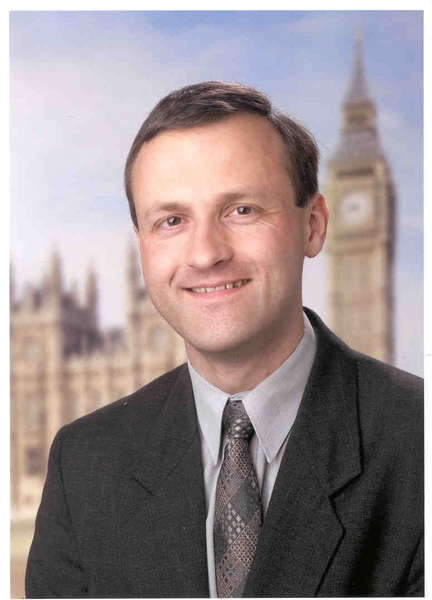
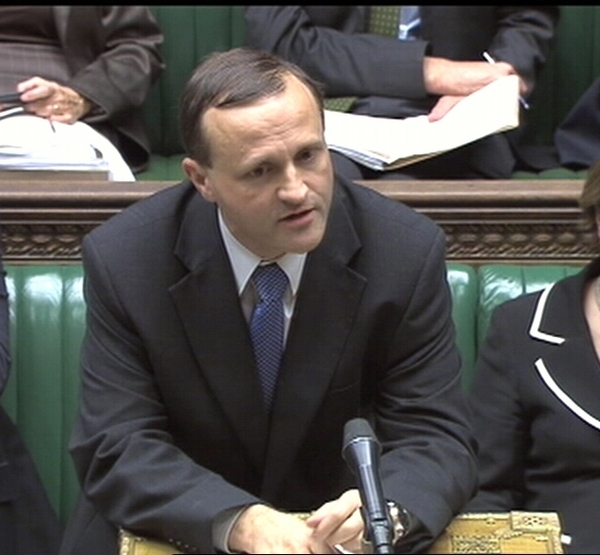
We'll be talking to the Rt Hon Steve Webb MP, on Wednesday 19 November, from 10 to 11am. If there's anything you want to know, whether you're confused about the recent changes or are still working and worried about what your pension will be worth when you come to retire, leave your question below.
Steve Webb was appointed Minister of State for Pensions in May 2010 and he is the Liberal Democrat MP for Thornbury and Yate.
The Minister of State for Pensions is responsible for:
- pensions policy, state pensions and Pension Credit
- private pensions, automatic enrolment and NEST
-The Pensions Regulator, Pension Protection Fund, Financial Assistance Scheme, The Pensions Advisory Service and the Pensions Ombudsman
- Fuller Working Lives
- Social Fund
- Winter Fuel Payments and Cold Weather Payments
- child maintenance
Steve was the Member of Parliament for Northavon from 1997 to 2010 and held a number of posts in the Liberal Democrat Shadow Cabinet including Shadow Secretary of State for Energy and Climate Change and Shadow Secretary of State for Work and Pensions.
Steve also worked as an economist at the Institute for Fiscal Studies from 1986 to 1995 before being appointed Professor of Social Policy at Bath University.
Join us on 19 November, or leave your question below in advance.
middleagedmummy
I'm not yet old enough for a pension (being in my mid-ish-50s) but I would like to know after not working or getting any benefits for the last 14 years (as I have been raising my children) will that count against me when it comes to what kind of pension I get?
Is it linked to what my husband earns? I ask this as I am in the process of a divorce and with my children soon to be adults will that mean when I get my pension I will be left with the bare minimum while he gets a nice fat pension based on all his national insurance contributions?
Finally - is there anything I can do to bump up my pension now. I don't have a job (and would have a 14 year gap since I was in employment anyway).
I'm very worried about this - if you can put my mind to rest that I won't be penalised with pensions for a) raising my children and
b) getting out of a bad marriage)
Under the new state pension, each year that you work and pay NI contributions or that you are at home bringing up a child under 12 and getting child benefit counts in full towards your state pension. With the new rules you will need 35 years of full rate contributions or credits to get a full pension, so even with a few gaps, you may be most of the way there. In terms of topping up, you may be able to pay voluntary NI contributions for some of your 'gap' years if they are relatively recent. But clearly if you did have paid work and the associated workplace pension, that would be the main other way of getting a better income in retirement.
granamia
i know very little about investments etc and have always played it safe with saving using big banks/Post Office. does encouraging people to withdraw sums to invest not simply encourage rogue schemes to prosper and prey on those of us without much knowledge of the world of finance? i have no doubt that we will hear more and more tales of people being ripped off by con artists exploiting this new "freedom" and ask how will you safeguard against this?
-granamia
You are right that if we give people freedom how to use their own money there is always a risk that they will invest it badly. We aim to make sure that consumers are well equipped through our 'guidance guarantee', and would encourage people to check with an Independent Financial Adviser as appropriate, especially if they are investing large sums. If people are suspicious they can report schemes to 'Action Fraud' and we are constantly working behind the scenes to disrupt the activities of pensions 'scammers'.
Nannynorth
Hello
I'm trying to understand all the changes to my pension and my mothers (yes, my mother is still going strong). Is there going to be a simplified guide somewhere we are all sent? And, not to be a cynical Susie but will pensions all change again if you don't win the next election? Sorry - but i am sure some of us are wondering this too.
Thanks for the message. I do agree that there have been a lot of changes, but I'm hopeful that whoever wins the next election, the changes we have brought in will be sustained. For example, no-one in Parliament voted against the new state pension legislation.
In terms of simple guides, the best guide to the new state pension can be found on the www.gov.uk website by searching for 'new state pension'. For those within a few years of pension age they can request a personalised tailored statement which will tell them exactly how much they can expect to get.
With regard to the private pensions changes, we aim that our 'guidance guarantee' will be a free and independent source of help and explanation as to how the new rules work.
etheltbags1
Mr Webb, do you know what its like being aged 60 today, on a low paid, zero hours job that I have to work in all weathers and all hours.
I was really looking forward to retiring at 60 to get a state pension that Ive paid into for 44 years. I have no private pension and no-one until recently told me to get one, none of my employers provided one until recently. I have also discovered that things like the winter fuel payment goes up with the state retirement age.
Please bear in mind that some of us workers have to choose to 'heat or eat'. In my job I can earn £10 a day for 6 hours or luckily on a better day a bit more. I cannot get tax credits as I don't do the required hours and I have several health problems that mean no-one would employ me in anything better. Don't get me wrong I have in the last 5 years trained for a professional occupation but guess what the recession means I had to give up my self employed work (no-one wanted to pay for my services). So I hope I can work for the next 6 years until I retire, even then I probably will have to work longer. Merry Xmas to you mr Webb.
Concerned to hear that you can only get £10 for 6 hours work, as this sounds in breach of the National Minimum Wage legislation.
It is true that your state pension age has risen, mainly due to a law passed in 1995 which started the process of equalising the pension ages of men and women. Unfortunately, the government of the day failed to write to people at the time, so many women were not aware that without the changes that we have made in this parliament, their pension age would in any case be well above sixty.
We do recognise the high cost of living which is why we have tried to control costs such as council tax bills and to remove the petrol duty escalator.
Gracesgran
Perhaps all the questions about WFA for those abroad could be rolled into one as we do seem to be being taken over by an interest group.
Anyway, my question is:
Under welfare reform it was originally timetabled for October 2013 that mixed age couples (one over pension credit age and one under it) would be unable to claim pension credit (through the older partner) but would be treated as working age and the working-age partner would have to claim universal credit instead. This means a huge drop in entitlement.
As universal credit was delayed, this date was delayed but I have been unable to find out a revised date. Could you explain what has happened with this?
The planned change in the treatment of ‘mixed age couples’ will take effect at the point that the Universal Credit service is fully available nationally for all new claims. We will make an announcement on the timing of this in due course.
Until this change is introduced ‘mixed age couples’ will have the option to claim either Pension Credit or Universal Credit.
narrowboatnan
I am planning to retire in July 2015. I am already in receipt of my state pension, but am also self employed. When I retire money from my self employment will cease. I shall claim Pension Credit but, as I understand it, will not be able to do so for three months after my self employment ceases. What I need to know is if I claim Pension Credit at the time of retirement do I then have to wait three months before any payment is made, and will payment be backdated to when I made the claim? Or do I have to wait three months AFTER I retire before I can claim?
There is no waiting period when making a claim for Pension Credit. The earliest you can apply is four months before you reach the Pension Credit qualifying age and Pension Credit can be ‘backdated’ for up to three months from the date you claim, provided there was entitlement for that period.
ollieamber54
It's all very well giving people the flexibility to withdraw large sums from their pension pots - but many of us will not have the financial know-how to invest this. Many others I am sure will be tempted to spend it early. And then where does that leave us? What happens to those who, for whatever reason, spend or blow or lose their money and then have many years to live off nothing?
We recognise that these are not always simple choices. This is why we are putting in place something called the 'Guidance Guarantee' which will be free help with making your choices. This can be face-to-face if you wish (delivered by the local Citizens Advice Bureau) or on the phone (through the Pensions Advisory Service) or via a special website. Your scheme will have to tell you about this free guidance and it should equip you to make the choices that are right for you, though you may want to think about paying for independent financial advice if you have a large pot or more complex affairs.
grandma1949
I am already in receipt of my state pension and so will not be entitled to the new Universal Pension when this is launched. Despite working for over 40 years, I only receive a reduced pension due to paying the lower married women's national insurance contribution for part of these years. Can you imagine how disappointed and annoyed I am to find that having contributed an enormous amount in national insurance contributions, I shall still only receive £100 per week, when the new universal pension receivers will get over a third more than myself, and this will include those who have done little or no work and lived on benefits for years!
I cannot be alone as this insurance contribution was very common when I first was married in the late sixties. How can this be reasonable or equitable. I have never claimed a penny in benefits in my life.
I do understand that not all women who signed up for the 'married women's stamp' many decades ago fully appreciated the consequences of doing so, but what it did mean was that they paid less NI contributions through their working life than women who paid the full stamp. So it would not be fair to make no distinction between those who paid the full stamp and those who paid the reduced stamp.
With regard to the new state pension, I should stress that it is still depending on a record of contributions or credits, so people who have 'never done anything' will not build up a state pension.
In terms of amounts, even without reform, many women retiring these days draw a state pension of £130-£140 per week on average, simply because of the growth of SERPS. Even if we didn't change anything, newly retired women who paid the full stamp would in any case generally get higher pensions than those who have already retired who paid the reduced stamp. Our reforms don't really change that fact.
HI there, I must admit I'm not a Gransnet user, but nonetheless I hope you'll answer my question. I'm 35, just had my 1st baby and am on maternity leave. I built a very good career before I had my daughter, of which I am proud and will at some point go back to. My question is - should I now be worried about staying off work to look after my daughter, and the resulting lack of NI payments? Should I be paying into a private pension during this time? Is there no point in pauying into a private pension if I can draw out my pension pot anyway?! Mightn't I just as well have a savings account? Thanks.
carbonn
I am 50 years old and married. My husband and I both work in reasonably (but not highly) paid jobs. Neither of our employers offers a pension. I had a pension with a previous employer although this is not worth very much. I also briefly paid into a private pension when I had a job that allowed me to do so - again this is not worth much. Everyone says there is no point in paying into schemes any more so we are left worrying about surviving on state pension alone. Can you offer any advice regarding what else we might be able to do (that's actually worth doing) while we are still working
Thank you
The good news is that the Government is now requiring employers by law to put employees into a workplace pension and to make an employer contribution. This is topped up by an employee contribution plus tax relief, and whilst you are free to opt out if you wish, overwhelmingly people are staying in. We've started with the biggest employers but by 2018 all employers will be in the scheme.
We are making sure that these are value-for-money pensions, by imposing a charge cap from next April, so if you want to build up a pension on top of the state pension, by far the best thing to do is to stay in the workplace pension into which you are automatically enrolled.
Obviously, it is also the case that the longer you are able to keep working and earning, even if only part-time, that will help your eventual position in retirement.
grahamrichards
Please find below copy of question that I forwarded to The Works & Select Committee and like many others who submitted similar questions didn`t get the courtesy of a response and/or acknowledgment and would be most obliged if you will let me have your views please.
I would be most obliged if you will place the following before members of The Works & Pensions Select Committee who will be meeting this coming Wednesday, 5th November and if they will raise the various points with Iain Duncan-Smith.
The inclusion of the French tropical departments in the calculations for the average winter temperature in France has unfairly raised the average temperature by including these figures. Nowhere within the calculation of the average winter temperature for the UK have the temperatures for overseas tropical regions been included. As a result the UK is proposing withdrawing the annual WFP for expat British pensioners now living in France.
The point has been raised many times before about the sub zero temperatures suffered by many elderly Brits now living in France and are very reliant on their WFP to help and assist with the cost of their winter fuel. I myself often experience average winter temperatures of -5° and in the winter of 2011 experienced temperatures of -20°C causing burst pipes and having to get a plumber in very quickly.
As a matter of priority these tropical department temperatures should be removed immediately from the calculations as a matter of utmost priority and the figures recalculated to provide a fair and realistic temperature of the true average temperature. Further it is wrong to defraud expat Brits of a non-means tested benefit to which they are perfectly entitled under EU law.
Winter Fuel Payments were never intended to be paid in warmer countries.
In 2013 the Chancellor announced that the Government intends to bring in an eligibility criterion based on average winter temperature, with Winter Fuel Payments going only to eligible people living in EEA countries with colder climates.
The French State defines itself as the mainland and its overseas departments And clearly it is not for the UK Government to redefine the territory of another EEA Member State.
Subject to Parliamentary approval, from 2015/16 Winter Fuel Payments will no longer be payable in Portugal, Spain, Greece, France, Gibraltar, Malta and Cyprus, where the average winter temperature is warmer than the warmest region of the UK.
beeswax
Please can you explain the tax implications of accessing the money early?
In brief, if you have a 'defined contribution' pension (ie a pot of money that has been invested and grown) you can take a quarter tax free as at present and then anything else you take out will be taxed as income in the year that you draw it. This means that there is a good reason to think about spreading the rate at which you take your pension money out rather than taking it all in one go, and possibly finding yourself having to pay higher rates of tax.
Hello
I'm trying to understand all the changes to my pension and my mothers (yes, my mother is still going strong). Is there going to be a simplified guide somewhere we are all sent? And, not to be a cynical Susie but will pensions all change again if you don't win the next election? Sorry - but i am sure some of us are wondering this too.
nannienoo
I wonder if you can clarify the position for people having to work longer in order to get their pensions. Will the retirement age continue to rise? As we are supposedly living longer I can see that this makes sense but working a full time job at 70 is nothing like doing it at 40 and there surely needs to be some reflection of this?
We have said that in future, for each extra year that people are expected to live, we will add 8 months to the state pension age and 4 months to the expected length drawing a state pension. In other words, the assumption is that people will spend about two thirds of their adult life in work and about one third in retirement.
We do recognise that not everyone can go on doing what they have always done right up to a pension age of 70, and we are keen to promote more flexible working and seeing retirement as a process rather than a cliff-edge. For example, some people may draw down a bit of their pension pot and combine this with a part-time job until they reach state pension age.
As you will know, pension ages are rising around the world, and if we do not do the same then it will simply mean that our children and grandchildren end up paying ever higher taxes for our retirement pensions.
Mr Webb, do you know what its like being aged 60 today, on a low paid, zero hours job that I have to work in all weathers and all hours.
I was really looking forward to retiring at 60 to get a state pension that Ive paid into for 44 years. I have no private pension and no-one until recently told me to get one, none of my employers provided one until recently. I have also discovered that things like the winter fuel payment goes up with the state retirement age.
Please bear in mind that some of us workers have to choose to 'heat or eat'. In my job I can earn £10 a day for 6 hours or luckily on a better day a bit more. I cannot get tax credits as I don't do the required hours and I have several health problems that mean no-one would employ me in anything better. Don't get me wrong I have in the last 5 years trained for a professional occupation but guess what the recession means I had to give up my self employed work (no-one wanted to pay for my services). So I hope I can work for the next 6 years until I retire, even then I probably will have to work longer. Merry Xmas to you mr Webb.
durhamjen
Was it your idea to allow people to take out their pension pots instead of buying an annuity?
Is it just a scheme to get more tax from people who do not understand the system?
The Chancellor and I were agreed that the current system is broken - people were being forced to buy an annuity even if it wasn't in their best interests to do so. Too many people were getting poor value in retirement.
We will provide people with free and independent guidance to help them make good choices about what to do with their pension pot, but we firmly believe that individuals should have the final say about what they do with their own money.
railman
With the "New State Pension" coming into force on 6th April 2016, and with the Government saying out will be no kless than £148-80 per week for anyone entitled to the full pension.
Is this not simply just the aggregation of the current basic state pension of £113 a week with the "Guaranteed Credit" element.
Can you confirm that the £148 figure is not the basic pension, and the basic pension will remain at £113 after 6th April 2016.
If that's not the case, it is a simple fact that anyone reaching their 65th birthday on say 6th March 1916, will not be entitled to the new rate of £148, and will therefore LOSE £30 per week compared to someone who's 65th birthday is on 7th April 2016.
What will you do about such an example?
Lots of questions there! First of all, for people who retire under the new system, there won't be a 'basic' pension and an 'additional' pension, there will just be the new state pension. As you say, the rate of that will be at least the level of the Guarantee Credit, so at least £148 or so per week.
For someone who retires under the current system, they will get their basic pension of up to £113 or so and a SERPS pension (unless they were contracted out) which could take them up to well beyond £148 - so they don't 'lose out'.
The key point is that the new pension is replacing both the basic and additional state pension.
I'm not yet old enough for a pension (being in my mid-ish-50s) but I would like to know after not working or getting any benefits for the last 14 years (as I have been raising my children) will that count against me when it comes to what kind of pension I get?
Is it linked to what my husband earns? I ask this as I am in the process of a divorce and with my children soon to be adults will that mean when I get my pension I will be left with the bare minimum while he gets a nice fat pension based on all his national insurance contributions?
Finally - is there anything I can do to bump up my pension now. I don't have a job (and would have a 14 year gap since I was in employment anyway).
I'm very worried about this - if you can put my mind to rest that I won't be penalised with pensions for a) raising my children and
b) getting out of a bad marriage)
norrinan
Hi,
I will receive my state pension in July 2017 when I am 64. I paid considerable sums into the SERPS scheme making my projected pension more than the flat rate new amount (currently predicted at around £150 per week I believe). Will I get the higher amount due to my SERPS contributions or will I be limited to the lower flat rate which should be implemented by then.
Hi - the short answer is that you won't be limited just to the flat rate amount; the way the system will work is that we will look at what you have built up by April 2016 under the old system rules and the new system rules, and whichever is the higher of these will be your 'starting amount' for the new state pension; so if - for example - the flat rate was (for round numbers) £150 per week and you already have £170 built up by 2016, you would get £170.
We're very pleased to have Steve ready and waiting to answer your questions. If you have another, or haven't posted yet, there's still time - just add your questions below.
twiggy
i don't really understand the thing about allowing extra payments to be made to top up state pensions. Could you please explain this please?
Thanks for the question. We are introducing a scheme called the 'state pension top-up' which starts in October 2015 and runs for about 18 months. People will be able to pay voluntary National Insurance Contributions and in return will get a higher state pension for the rest of their life. This extra state pension will be index-linked. The amount you have to pay will depend on your age. More details can be found by searching for state pension top-up on the www.gov.uk website.
i don't really understand the thing about allowing extra payments to be made to top up state pensions. Could you please explain this please?
LucyGransnet
We'll be talking to the Rt Hon Steve Webb MP, on Wednesday 19 November, from 10 to 11am. If there's anything you want to know, whether you're confused about the recent changes or are still working and worried about what your pension will be worth when you come to retire, leave your question below.
Steve Webb was appointed Minister of State for Pensions in May 2010 and he is the Liberal Democrat MP for Thornbury and Yate.
The Minister of State for Pensions is responsible for:
- pensions policy, state pensions and Pension Credit
- private pensions, automatic enrolment and NEST
-The Pensions Regulator, Pension Protection Fund, Financial Assistance Scheme, The Pensions Advisory Service and the Pensions Ombudsman
- Fuller Working Lives
- Social Fund
- Winter Fuel Payments and Cold Weather Payments
- child maintenance
Steve was the Member of Parliament for Northavon from 1997 to 2010 and held a number of posts in the Liberal Democrat Shadow Cabinet including Shadow Secretary of State for Energy and Climate Change and Shadow Secretary of State for Work and Pensions.
Steve also worked as an economist at the Institute for Fiscal Studies from 1986 to 1995 before being appointed Professor of Social Policy at Bath University.
Join us on 19 November, or leave your question below in advance.
test
Please can you explain the tax implications of accessing the money early?
Join the conversation
Registering is free, easy, and means you can join the discussion, watch threads and lots more.
Register now »Already registered? Log in with:
Gransnet »