Loss of sense of taste and smell
Last letters become first - March 26
So…..what are we all up to on this beautiful sunny bank holiday? ☀️

 All that talk about Valentine’s Day marking the start of spring, getting our hopes high, and then it rains for months on end. Peter Holden, ornithologist and wildlife specialist, tells us how the delayed sunshine has affected migrating birds - which ones to look out for, what they may have gone through on their journeys and what you can do to help.
Spring seems finally to have arrived! Hedgerow plants such as blackthorn are weeks late flowering, and birds we think of as winter visitors were still feeding in the garden in late April. Migrant birds from the south seemed destined never to arrive: nature seemed stuck in a rut.
But it's finally all changed. We always wonder when winter will shift gear into spring because it varies from one year to the next. In a year when there's an ‘early spring’ some birds, such as blackbirds, may start nesting in February. Spring flowers bloom early and butterflies are sometimes on the wing, encouraged to fly on unusually mild late winter days.
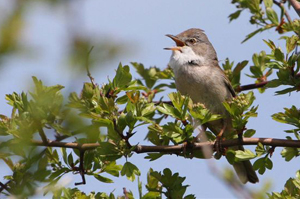
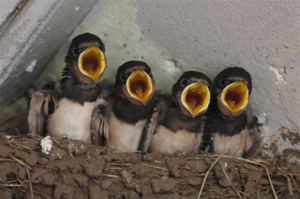 For me, there is one event that makes the change to spring irreversible; the arrival of the birds we usually call ‘summer migrants’. The most well known, of course, are swallow and cuckoo, but it is often the discordant jangle of a whitethroat from a roadside hedge or the beautiful warble of a blackcap from a thicket that tells me they have arrived.
On the Norfolk coast at the start of May I was aware of an almost constant movement of swallows and martins, all heading in the same direction. Held up for a time by weather conditions in Africa or Europe, they were now steaming northwards, driven by an irresistible urge to breed.
Witnessing birds migrating is one of those great wonders of the natural world. Those swallows would have wintered in South Africa - not far from the Cape - yet in the space of a few weeks they were passing through Norfolk, heading for who knows where? - perhaps Scotland, perhaps even Scandinavia. They will be searching out their familiar territories and perhaps even the same mate as last year. If they are youngsters then they will return to familiar locations and seek to establish their own territory for the first time.
 Every year, this feat of navigation leaves me in awe of these tiny creatures that can make their way from one end of the world to the other many times during their lives. We know they instinctively head in a particular direction but detailed navigation requires much more than that - especially when they are battling strong winds and ocean currents. We know they can sense the earth’s magnetic field and have the equivalent of an inbuilt compass and clock; we know they can use the sun; but many birds travel at night when the star patterns are their guide. Above the clouds, they can read the earth’s surface through infrasound. Closer to home, memory helps them to find exactly the same barn or bush they lived in last year.
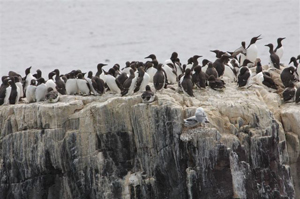
It is not only our songbirds that are returning; out at sea birds have been heading for our islands - some, like the manx shearwater, from as far away as coast of South America. The British Isles is home to important numbers of seabirds: gannets, puffins, guillemots and fulmars, to name but a few. They will have wintered out on the open oceans and now they need the safety of land to nest and breed - by autumn most will have gone again.
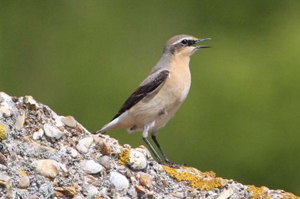
The British Isles sits at a sort of crossroads for many of these species. Those that wintered here, such as the fieldfares and the pink-footed geese, will by now have flown north - fieldfares to Scandinavia, pink-feet to Iceland. Instead, from Africa, come many of our songbirds and, from the sea, the seabirds. Yet others will merely pass through Britain - like the tiny wheatear, a robin-sized bird that winters in central Africa: some will stay here and nest but other wheatears use our islands to break their journey and then fly on to Iceland, Greenland and even into arctic Canada.
 We should delight in the results of these migrants' journeys and enjoy their company while they are with us, but we should also remember the price that is paid for such odysseys in lost lives.
Natural causes such as severe weather will be the source of many casualties along the route. Some birds which arrived early may not have found the food they expected and may have died as a result.
Such problems have always been encountered, and on the whole, the species benefit from making their journeys. Newer threats are man-made.
Development or climate change in Africa can change habitats so that winter quarters no longer have the food supplies they once had.
Hunting, especially on Mediterranean islands, kills millions of migrants each year. Our own countryside has also changed - with more productive fields and fewer insects to provide food for growing families - and taken all together, these hazards sometimes make the odds seem stacked heavily against the birds.
So what can we do? Well, we can start by ensuring our gardens are safe havens, with lots of natural food - plants for insects, thick bushes providing safe nesting sites both for residents and for any migrants that happen to drop in. Most of all, we can share this exciting time of year with the next generation. Children are often unaware of what changes are going on around them and find it hard to appreciate the distances involved or recognise a migrant bird from a resident.
This is the role for ‘super-gran’ - the natural teacher who has a once-in-a-lifetime opportunity to sow the seeds of wonder from which understanding and responsibility will eventually grow.