

Winter birds
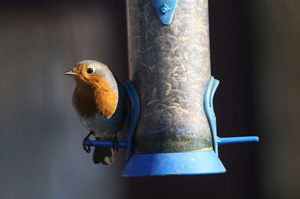 The cold winter months are settling in and, with fewer hours of daylight, birds have limited opportunities to find food and warmth. Ornithologist and wildlife specialist Peter Holden MBE, who's visited us for a webchat, has put together some pointers on what to look out for this winter. From how birds find food to how they travel in numbers, here are tips on getting your grandchildren interested and priming your garden to do your bit to help.
Get children interested
I still remember my visit to the Gransnet office for the live webchat. Since then I have become even more convinced that the older generation holds a vital key to influencing the younger generations about the natural world that surrounds them.
I often see grandparents with young children visiting nature reserves, going for walks in the countryside and sometimes paying for them to join conservation charities. These are people who have reflected and recognised the value of encouraging children to find out more about the world around them. Their activities complement and bring to life all the stuff schools should be teaching.
As autumn moves into winter, let’s consider some of the changes in the countryside and what we should be showing and telling children.
Finding food
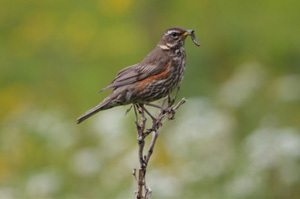 Survival is a serious challenge for birds that remain here for the winter. The odds are stacked against them and many will not survive. Temperature is actually the least of their problems; they are insulated against cold weather as long as they have sufficient food.
Some birds change their diet. Blackbirds that ate worms in summer feed on fruits and berries in winter; blue tits eat caterpillars when they are available but become seed-eaters in winter. Others, such as wrens and treecreepers, remain insect-eaters all year and are constantly hunting.
Finding food becomes more difficult as the winter progresses, as there is a possibility that autumn seeds and berries may run out after Christmas. Snow and ice can hide food and long nights and short days mean less time for searching. With more hours of darkness, the birds must hide away and conserve energy.
For small birds, nearly all daylight hours are spent searching for food. Many form flocks, which not only means more eyes searching for food but also looking out for danger. These flocks roam woods and hedges in their endless search for food and many visit gardens.
Researchers have found that during a winter’s day there may be a constant flow of blue tits into a single garden - perhaps 100 or more. These birds roam widely in their endless search for food.
This is a reminder of just how important feeding birds in winter can be. Once it was kitchen scraps that topped the menu but these days there is a range of commercial bird food available, which can be delivered to you door by the RSPB and other suppliers. That doesn't mean kitchen scraps have no value – personally I use both, giving birds a balanced diet and helping to recycle waste food.
Safety in numbers
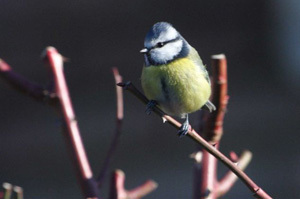 Birds that defended their territories against all-comers in spring are now happily feeding alongside others of the same species, often with those of other species as well.
Watch a roving flock of long-tailed tits in a wood – always entertaining – and you may well see blue tits, coal tits, goldcrests, treecreepers and other small birds mixed with them. Even the resident nuthatch may join, but only as far as its territorial boundary.
Some birds form spectacular roosts – rooks, jackdaws and starlings gather in their thousands, and their aerial convolutions are truly spectacular.
These roosts have many advantages:
- They are at well-chosen and often traditional sites.
- They provide safety in numbers.
- They provide a degree of additional warmth (some small birds like long-tailed tits will huddle together to conserve their body heat).
Recently, scientists have discovered some of these roosts also act as "information centres" with unsuccessful birds following successful ones to new feeding areas the following morning.
These new discoveries open a fascinating window on the natural world but there are may other mysteries: where, for example, do your garden birds go at night – not far away, but do you know where they are? One thing is for sure; many will be in garden bushes and shrubs, provided they are thick enough to give shelter and protection from predators.
How you can help
- The start of spring and autumn wildlife.
- Peter Holden's webchat on birdwatching.
- Find out how to make your own bird table.
- Find your nearest woods.
- Other gardening ideas for this winter.
- Chat to other gransnetters on our forums.
Garden roosts are a reminder that we can help by not over managing our gardens and leaving those dense bushes and untidy corners alone, at least until spring weather and longer days.
So with winter almost here I would suggest:
- Getting some bird feeders put up - close to cover, plus off the ground to protect from predators.
- Put out kitchen scraps - things like apple cores and crumbs can be thrown on the ground.
- Go on a winter walk and watch where garden birds go at night.
- Track down a big roost of birds such as starlings or rooks and visit at dusk.
- Get ready for the Big Garden Birdwatch at the end of January.
Finally some recommendations for Christmas:
- Buy children junior membership of the RSPB or the Wildlife Trusts.
- Buy a nature book as a Christmas present.
- Visit www.rspb.org.uk to order birdfood – the ‘feeder mix’ and ‘fat balls’ are especially popular with my garden birds.
You can buy Peter Holden's book Birds: Their Hidden World here.