
Gransnet forums

Legal, pensions and money

Times article claim that Waspi women are tone deaf and should read the room

(138 Posts)
Pleasebenice Thu 14-May-26 11:17:15

The young male writer suggests that we are the golden generation and have had it good all our lives and should now give up wanting more. I think he misses the point that we stood up for what is right all our lives and still do. See any protest March and there are a high proportion of older people still willing to out there and fight the good fight. Climate change for example.

Graphite Sat 16-May-26 15:21:33

I don’t understand the repeated argument about the old and new State Pension.

The old was a two tier system comprising basic pension plus additional state pension (ASP). If your employer contracted out of the ASP you should have a works place pension which contains a Guaranteed Minimum Pension (GMP) to be no less than you would have received had you not been contracted out of the ASP.

The new State Pension is a single tier pension.

When contributions to the ASP were abolished from 6 April, the rate of NIC remained the same but people were now paying into one single tier State Pension.

When someone reaches SP age, if their NIC years straddle April 2016, the DWP do a calculation to see if they are better off under the old or new systems. Many people are better off under the old. My NIC record is from 1971 to 2021. I am better off with old State Pension because COPE deductions substantially reduce the new SP.

When the rate for the new State Pension was determined for 2016 it was set at a rate roughly 125% times the old state pension plus a little for the graduated pension scheme which preceded SERPS.

The rates in 2016 were £119.30 and £155.65.

At current rates, the old state pension is £184.90 and the new is £241.30. £184.90 times 125% is 231.13.

So the better comparison to do is: (Basic old pension plus ASP (or GMP) plus graduated) V new State Pension.

The maximum ASP someone can have built or inherited is £230.54 so it is entirely possible to have an old State Pension of £415.44.

At May 2025, 758,363 people on old State Pension had a weekly state pension above £300. 9030 had a state pension more than £400 and 160 over £500. (Source StateXplore).

MrsMatt Sat 16-May-26 15:30:13

Basgetti

Looking at the prospects for our adult children, sorry, I agree with him.
The information was out there 🤷‍♀️

What information was 'out there'?.

I found out in 2014 after my husband died. I was self employed and was checking my tax return. I had no letter or notification from HMRC or DWP about the age increase.

It was too late to do much about it by then. So now I am aged 67 and working part time. Partly because I need the money and artly because staying indoors drives my nuts.

Graphite Sat 16-May-26 15:39:31

There were no plans to tell women born after May 1955.

The PHSO report makes that clear.

114. The proposed schedule for issuing letters included women who turned 60 between April 2010 and May 2015. We have seen no evidence of what – if anything – DWP proposed to do to tell women who turned 60 after May 2015 (whose State Pension age had increased to 65 under the 1995 Act).

FranP Sat 16-May-26 15:42:54

Doodledog

Agreed, Molly. I think working age people are fed up with being the ones who have to subsidise everything. The government needs to wise up to that and somehow make it the case that people are always better off in work than not. If they don't, the populists will take advantage of public discontent, and heaven help us all.

but they are the ones who do not sweep, and then moan about the weeds; they are the ones that spend on such things as bottled water, two cars, prepared meals and lots of clothes and then complain they are poor; they are the ones that expect free school meals and benefits for their larger families and then complain about a few extra pounds for a small number of women. They will realise what it is about when they have to wait until 70 to retire.

Doodledog Sat 16-May-26 15:51:51

Who are? Working age people? Everyone between, say, 20 and 67?

I don't think so.

keepingquiet Sat 16-May-26 15:52:31

I always said if women has received equal pay alongside men this would never have been a thing.

FranP Sat 16-May-26 15:55:03

Yes, we knew, but potentially too late for some to begin a career of any high wage. Yes we knew but anything we earned was paying college fees etc for our children at the time, not to top up our pension.
Yes we knew, but the extra year for those after April 53 was pretty well hidden and definitely too short notice.
Yes we knew but the extra NI contributions that were slapped on at the same time should have been enough for this not to be necessary.
Yes we knew, but we are a generation that had 2 full time jobs, and are ready to give one up - it is younger women who are able to expect their spouses to pitch in to housework.

What is far less publicised is the "stamps" that we can claim for our child rearing years - many still do not know this

Maggiemaybe Sat 16-May-26 16:22:23

It just surprises me that so many women seem to be perfectly happy with the fact that the findings and recommendations of the Ombudsman are being completely ignored. So what exactly is the point of the PHSO? Of the six year investigation that concluded there had been maladministration and compensation was due? Is this going to be the future then, that there will be no recourse for anyone who feels they have been unfairly treated by the powers that be? Because if that’s the case, it won’t only be WASPI women who’ll be expected to put up and shut up.

JaneJudge Sat 16-May-26 16:29:00

Of course, it's women's fault again. If only they weren't so silly hmm

I consider myself a modern socialist but I am sick of whole working age families (that I know) thinking they are better off staying at home and lets face it, they most probably are in some parts of the country. It's wrong. I don't blame waspi women for this

Graphite Sat 16-May-26 16:47:56

Exactly, MaggieMaybe.

If this was an Ombudsman reporting on a consumer matter then the party found in the wrong, be it a retailer, a bank, car finance etc, then they would be ordered to pay compensation.

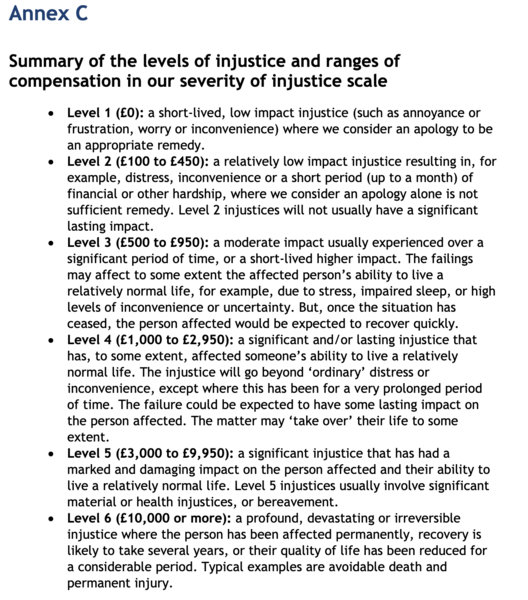
It is not as if the PHSO is suggesting that much and only to the most serious of cases. I wonder how many people have seen what has been suggested and the criteria?

There is money here to pay it. The National Insurance Fund is awash with surplus funds, some £50 billion, state pension that wasn’t paid to women, especially those caught up in the accelerated changes; changes that George Osborne bragged were the easiest savings he had ever made.

I was 23 years old when this all started with the 1978 EU directive that successive Thatcher governments did nothing about; age 40 when the 1995 Pensions Across was passed. I’m now pushing 71. To think the arguments are still dragging on is incredible.

I don’t think it’s helped by the different campaigns including those women who think they should have their pension backdated to when they were 60. That is never going to happy. It just muddies the water.

Jane621 Sat 16-May-26 16:49:01

Not read the article. I am a WASPI and I think the 'cradle to grave' Nanny state is unsustainable. If you pay in to the system you should be paid out accordingly. If you haven't contributed then you should not qualify for any help whether it is housing, healthcare or whatever. The money isn't there to pay for people who have never put anything in. The sums don't add up. If you pay National Insurance you qualify for NHS care and a State Pension. Just my simple view of it all.

Doodledog Sat 16-May-26 17:03:06

Jane621

Not read the article. I am a WASPI and I think the 'cradle to grave' Nanny state is unsustainable. If you pay in to the system you should be paid out accordingly. If you haven't contributed then you should not qualify for any help whether it is housing, healthcare or whatever. The money isn't there to pay for people who have never put anything in. The sums don't add up. If you pay National Insurance you qualify for NHS care and a State Pension. Just my simple view of it all.

I agree, except that I think there should be support for those who can't pay in. Maybe they are sick, or disabled, or looking after someone who is sick or disabled, or maybe they are temporarily unemployed, or retraining. Whatever, I do think there should be a safety net. What I object to is people choosing not to work, but expecting to get all the things paid for by those who do. The welfare state should be based on 'From each according to ability/To each according to need.'

I think the welfare state will be rolled back before long. There are too many people taking and not enough putting in. Unfortunately, it could be that pensions will be rolled back too, despite the fact that many people paid NI for decades. The mantra of 'there is no pot' is firmly established now, as is the thought of a pension as a benefit.

Allira Sat 16-May-26 17:42:48

Doodledog

Agreed, Molly. I think working age people are fed up with being the ones who have to subsidise everything. The government needs to wise up to that and somehow make it the case that people are always better off in work than not. If they don't, the populists will take advantage of public discontent, and heaven help us all.

But did we not subsidise everything - or nearly when we were the ones working?

In fact, any pensioners are still paying income tax and it only takes a little additional income above the State Pension to bring pensioners into the first tier of taxation, with exactly the same Personal Allowance (frozen until 2031) as working age people.

The only difference is we no longer pay National Insurance.

Many pensioners are still subsidising those unwilling to work.
Unable to work is yes, they need help, but there are people of working age who do not work when they could.

Allira Sat 16-May-26 17:43:27

any
many pensioners

kjmpde Sat 16-May-26 17:56:00

I had a letter telling me of the delayed pension BUT I am told that in the end the government did not want to spend money on telling everyone. So the information was out there for the majority but not everyone. The change was brought in too soon for many women and some had given in their notice on the assumption that they would be able to retire at 60 - not 62 or later.

GreyKnitter Sat 16-May-26 17:58:24

I agree too the info was available.

WithNobsOnIt Sat 16-May-26 18:18:28

Graphite

This has all been argued over many many times and explained many many times.

I suspect that many claiming the information was “out there” have not bothered to read the PHSO reports. Nor are they aware of the surveys that were done in 2003/4 and 2007 that showed just how many women didn’t know what their new State Pension age was.

Otherwise, the PHSO would not have concluded after a six year investigation that there was maladministration and setting out a chart for compensation.

I was in the cohort of women who were never going to be told personally what their new SP age was - those born after May 1955.

What I do have is a letter from the Pension Service (part of DWP) dated 2007 with accompanying leaflet categorically telling me that I will be able to claim my SP when I am 60. I was then 52.

In other words, twelve years after the 1995 Pensions Act, DWP were still sending out wrong information.

Coincidentally, in 2007, the DWP finally admitted that its information campaign was not working. They knew this is 2003 but did nothing about it.

Extract from PHSO.

115. Unpublished DWP research from 2007 found 85% of women aged 48 to 59 knew State Pension age was going to be equalised, but many women did not know when it would happen. The research also found that 50% of women whose State Pension age had risen to between 60 and 65, and 36% of women whose State Pension age had risen to 65, still thought that it was 60. DWP told us that if people are aware of the changes, they can find out their own State Pension age.

116. An internal DWP memo from April 2007 described the 2007 research findings as ‘depressing reading’. The memo reflects on the lack of progress since 2004 and the prospect of future complaints from women. It states:

‘You floated the idea of contacting the Ombudsman to get a feel for how she would react to claims from women saying they had never been told or were not aware that state pension age is increasing. In the light of the lack of upward movement from our 43% base figure from 3 years ago, we suggest putting this off until we can explain our strategy from here to get the message over. If we go now, we face being painted into a corner. Despite a really strong defensive brief, we still have 50% “ignorance levels” with three years to go. [The Ombudsman’s] first question will be what are you proposing to do about it?’

117. A ministerial submission from December 2007 shows DWP knew people did not understand the impact of the changes for them. It says: ‘One of the key issues is that whilst some women do in fact have an awareness of the impending change, they do not understand how this relates specifically to them’.

When, at the outset women were supposed to be given fifteen years notice of the change, it took the DWP from 1995 to 2009, 14 years to get around telling only some of them.

I don’t expect compensation but I will challenge any women or man who trots out the tired “information out there” argument.

*Ready the PHSO reports and surveys.*

Thank you Graphite for explaining everything and that the information was not out there..For me and plenty of other women it was certainly not.

I was born in early 1955 and had 6 years added to my Pension Retirement Age. That is to 66.

I have written about this in Mumsnet before so l am not going to repeat myself at length again.

But l am still annoyed that the know alls keep parroting that same message that the information was out there.

Millions of Women were not written to by the DWP to inform them.of the change.

Also, Women born after a the 6th of
April 1955 were never promised a Pension at 60. See the original Pensions Acts.

Also Labour kept quiet about this for years. Another one of their underhanded, shitty little tricks.

WithNobsOnIt Sat 16-May-26 18:20:50

Sorry , l should have said Gransnet.
Hope you will all forgive me.

eazybee Sat 16-May-26 22:29:26

Did men have the option to retire at 60 with full pension?
Despite the fact they generally worked more years yet tended to die younger?

Basgetti Sat 16-May-26 22:38:42

Mollygo

Basgetti
Looking at the prospects for our adult children, sorry, I agree with him.
The information was out there 🤷‍♀️

“The prospects for our adult children will be heavily affected by the increasing number who can’t or don't work.“

No experience of that, Mollygo. Our adult children work and study (on their own time) far harder than I ever did, for longer hours and unsociable shifts, one whilst parenting (brilliantly, as a child psychologist studying for their MA).
Both have their own homes: because as higher earners we were able to help them out.

I missed out on waspiness but was very well aware of the changes. At 62, I shan’t be the least surprised if my entitlement to a state pension vanishes with the next Goverment.

keepingquiet Sat 16-May-26 22:42:07

eazybee

Did men have the option to retire at 60 with full pension?
Despite the fact they generally worked more years yet tended to die younger?

Yes but they also earned more- even those without families to support.

Doodledog Sat 16-May-26 23:04:08

Allira

Doodledog

Agreed, Molly. I think working age people are fed up with being the ones who have to subsidise everything. The government needs to wise up to that and somehow make it the case that people are always better off in work than not. If they don't, the populists will take advantage of public discontent, and heaven help us all.

But did we not subsidise everything - or nearly when we were the ones working?

In fact, any pensioners are still paying income tax and it only takes a little additional income above the State Pension to bring pensioners into the first tier of taxation, with exactly the same Personal Allowance (frozen until 2031) as working age people.

The only difference is we no longer pay National Insurance.

Many pensioners are still subsidising those unwilling to work.
Unable to work is yes, they need help, but there are people of working age who do not work when they could.

Yes, we subsidised everything when we were younger, and many of us pay tax now - I haven't argued otherwise.

That doesn't alter the fact that workers (which includes retired workers) are fed up with paying for others not to work.

Allira Sat 16-May-26 23:08:47

keepingquiet

eazybee

Did men have the option to retire at 60 with full pension?
Despite the fact they generally worked more years yet tended to die younger?

Yes but they also earned more- even those without families to support.

No, men's retirement age was 65.

They may have been able to draw a works pension before 65 but not the State Pension.

Doodledog Sat 16-May-26 23:14:33

eazybee

Did men have the option to retire at 60 with full pension?
Despite the fact they generally worked more years yet tended to die younger?

No, but many men had far more opportunities than many women.

The gender gap for pensioners is still embarrassing. For much of the last century women were discriminated against, and that didn't stop when the EA was passed. There were years of historical discrimination before that, which meant that even women who were fully aware of the changes couldn't catch up.

The NSP treats people as individuals, which is fair in many ways, but many women who thought they would benefit from their husbands' pensions no longer do, which can make a big difference - particularly to widows.

It is just not fair to compare the position of men with that of women when it comes to pensions. Yes, men worked for longer, but they earned more, had more opportunities to pay into occupational pensions and did not have years added to their working lives at short notice.

Graphite Sat 16-May-26 23:52:24

The contributory pension was introduced in 1925 with the age set at 65. A married couple's rate of pension was paid if both spouses were aged 65 or more. As many men tended to marry women younger than themselves, that meant many men had to wait for some years after they reached 65 to get the higher rate for their wives.

In 1940, pension age for women was cut to 60 to try to ensure for most couples that the married rate would be paid as soon as the husband reached 65. That’s the reason there was a five year discrepancy in SP age. (Source Paul Lewis, Moneybox.

The unequal pension age was always rooted in this, that many married women did not work outside the home or if they did, they opted to pay the small stamp, relying on their husbands for a pension. This is why there are still hundreds of thousands of people receiving Category B pensions for which no NI was paid. Married men paid no more NI than a single person and yet can claim up to £110.75 per week more pension for their spouse.

Category B pensions were not abolished but were phased out (along with Category C and D pensions) for anyone reaching State Pension age on or after 6 April 2016. With that also went the entitlement to claim a late spouse’s pension which is also part of Category B.

It's another reason why, when people grumble about the difference in old and new State Pension, they are not taking all the factors into account.
