Gransnet forums

Legal, pensions and money

Times article claim that Waspi women are tone deaf and should read the room

(138 Posts)
Pleasebenice Thu 14-May-26 11:17:15

The young male writer suggests that we are the golden generation and have had it good all our lives and should now give up wanting more. I think he misses the point that we stood up for what is right all our lives and still do. See any protest March and there are a high proportion of older people still willing to out there and fight the good fight. Climate change for example.

Chardy Sun 17-May-26 08:21:56

eazybee

Did men have the option to retire at 60 with full pension?
Despite the fact they generally worked more years yet tended to die younger?

9m men have retired at 60 on their workplace pensions because Margaret Thatcher paid their NI contributions for 5 years
When 50s women asked for similar support, it was denied

keepingquiet Sun 17-May-26 08:23:38

Thankyou for this.

Allira Sun 17-May-26 10:38:01

Chardy

eazybee

Did men have the option to retire at 60 with full pension?
Despite the fact they generally worked more years yet tended to die younger?

9m men have retired at 60 on their workplace pensions because Margaret Thatcher paid their NI contributions for 5 years
When 50s women asked for similar support, it was denied

Really?

Just checked and it was introduced by Geoffrey Howe, the Chancellor, in 1983, in order to reduce unemployment and open up jobs for younger people.
It operated for 35 years until 2018.

I've never heard of it. DH would not have taken advantage anyway, he carried on working until 67 because he enjoyed it!

Graphite Sun 17-May-26 10:54:35

Chardy is absolutely right.

David Hencke, who has done a lot of campaigning in support of the women affected by equalisation, wrote about his this in 2020 when a FOI request revealed that 9.8 million men had had their NIC paid from age 60.

davidhencke.com/2020/07/28/exclusive-now-9-8-million-men-over-60-had-their-national-insurance-contributions-paid-by-the-state/

Extract:

The new disclosure makes it even more galling for the women who were originally promised they would have their national insurance contributions paid between 2010 and 2018 only to have the offer withdrawn a year before it was due to start. A number have had to pay thousands of pounds to make up the sum for a full pension while others simply have not been able to afford it.

knspol Sun 17-May-26 11:58:46

Doodledog ''The welfare state should be based on 'From each according to ability/To each according to need.'"
Sums it up for me!

mae13 Sun 17-May-26 12:00:21

eazybee

I agree; the information was there, and I cannot support a demand for payment of extra pension to which people are not entitled.

To people who parrot "the information was there", I imagine your husband was kind enough to tell you all about it........

Chardy Sun 17-May-26 12:41:42

Allira

Chardy

eazybee

Did men have the option to retire at 60 with full pension?
Despite the fact they generally worked more years yet tended to die younger?

9m men have retired at 60 on their workplace pensions because Margaret Thatcher paid their NI contributions for 5 years
When 50s women asked for similar support, it was denied

Really?

Just checked and it was introduced by Geoffrey Howe, the Chancellor, in 1983, in order to reduce unemployment and open up jobs for younger people.
It operated for 35 years until 2018.

I've never heard of it. DH would not have taken advantage anyway, he carried on working until 67 because he enjoyed it!

The estimate is that under 200,000 men retire each year (that's based on ONS data). That means that a large proportion of men took advantage of it in 35yrs.
2018 is an interesting date. Eight years of women whose SPA was rapidly increased, were denied it.
So much for CEDAW

Ali61 Sun 17-May-26 13:02:24

I totally agree with earlier posters who are pointing out the fact that women in that particular cohort may have known their SPA was increasing, but were not informed at all by the DWP.

As explained below it was the acceleration by the Coalition government that did the real damage. Women were informed their SPA would be 60, 61 or 62, so naturally made decisions based on that fact re stopping work or cutting down to part time. To then find that they had to wait another 4 or 5 years must have been devastating. These are the women who deserve some compensation.

The UK Coalition Government accelerated the state pension age (SPA) for women in 2011 to reduce public spending and achieve gender parity. This legislation sped up the equalisation of women’s state pension age from 60 to 65 by 2018—two years earlier than previously planned.The acceleration was enacted under the Pensions Act 2011 with the following key details:The Timetable: Instead of waiting until April 2020, women born in the 1950s saw their retirement age gradually reach 65 by November 2018. Furthermore, the legislation brought forward the planned increase in the SPA for both men and women from age 65 to 66 (achieved in 2020).Impact on Women: The accelerated timescale meant that around 500,000 women had to wait 18 months to two years longer than they had originally expected to collect their state pension. Many argued that these changes were implemented abruptly without adequate or timely notification.WASPI Campaign: The acceleration sparked significant backlash and led to the formation of the Women Against State Pension Inequality (WASPI) campaign. Protesters have continually lobbied the government to provide transitional compensation for those impacted financially.Official Findings: Following a lengthy investigation, the Parliamentary and Health Service Ombudsman (PHSO) published reports criticising the Department for Work and Pensions (DWP) for maladministration regarding their failure to communicate these accelerated changes clearly to the affected women in a timely manner.

Graphite Sun 17-May-26 13:24:57

Yes Chardy. So much for CEDAW.

There is so much more to this campaign than petty arguments over women allegedly not seeing "information that was out there” e.g. leaflets put in job centres and benefits offices or distributed by trades unions. Fat lot of use if you were working, not going to the job centre or benefits bffice or not in a trades union.

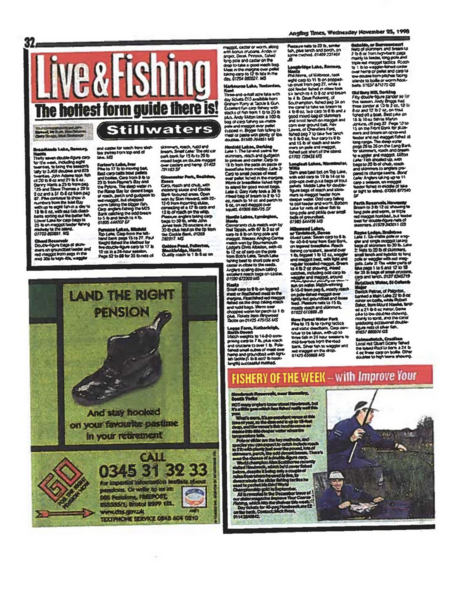
And what about his cited advert? Again, fat lot of use if you didn’t happen to be reading the Angling Times in November 1998 and even if you were, it says nothing about women's state pension age changing. At that stage, the increase in SPA to beyond 65 had not be leglisated so that ad can only have been aimed at women.

I am not going to take notice of what some young male reporter on The Times who doesn’t appear to have any qualifications in finance, worked his way up from being a hack on the Daily Mail, says about the campaign and using the usual trope of one person’s pocket being picked to pay for someone else.

As Ali61 explains, the was all made much worse by the acceleration that George Osborne claimed saved £60 billion. Those billions saved are sitting in the National Insurance Fund.

If Jeremy Hunt could take £10 billion of that to give workers a 4% NIC cut as a pre-election sweetener, so this government could take another £10 billion to settle this. The money is there.

When I read in today’s news that the country is spending £1 billion a year on vape disposal I wonder if we really are all going slowly mad.

yogitree Sun 17-May-26 13:34:07

Doodledog

That's hard lines. There should have been a sliding scale so that for every year you lost you got £X on the pension. It's not just the pension itself that was lost, either. Or the extra years of working for those who couldn't take early retirement. It was the years of free travel and so on.

I think a lot of people who want women to be quiet about losing so much forget that 'equality' didn't happen on the day the new rules came into effect. Years of lower pay, fewer opportunities, lack of childcare etc had already worked to ensure that most women's pensions were well below those of their husbands, and the amount of notice given those who got it was not enough to make that up.

Good points by DD. It seems that some imagine that 'the information was out there for everyone'. Well, it genuinely wasn't for me - I didn't read the publications they put notice in like 'The Lady' or 'The Timnes' and I certainly didn't get notified by post.
I had no private pension as these were not offered in the jobs I had and sometimes when I was bringing our children up, I worked up to 5 part time jobs (sometimes taking the kids with me) to make ends meet. Many of these jobs were manual. Of course, these didn't offer pensions either and there was no chance of me affording child care.
I lost £48K of pension that would have been very helpful to get accommodation for my old age that is suitable for my disabilities which could be attributed to the types of work I have had to do.
The other consideration is that men (in my experience older than me) who were 60 were allowed to give up work and claim ESA! What's good for the boys was Not good enough for the girls.

Casdon Sun 17-May-26 13:42:32

I’m a WASPI, but I do think the battle is lost now, so there is no point in keep bringing up the grievances, because the time has past when compensation might have been forthcoming from successive governments. It makes little difference who is to blame once it’s water under the bridge. That doesn’t mean I’ve forgiven.

SueDonim Sun 17-May-26 13:56:42

I am one of the cohort who lost out but I am in the fortunate position that I have other pension provision. Other women do not have this safety net and I feel for them. flowers

I am also one of those who was unaware of these changes and my husband didn’t know either, despite him always being all over our finances in those years.

I find the argument that ‘the information was out there’ utterly bizarre. In what other areas do we apply this denial of liability? Obesity? Overeating and poor quality foods made you overweight - the information is out there, so you don’t deserve help in managing your condition. You smoked and now have lung cancer? The information is out there that smoking is bad so no NHS treatment for you. There are a million similar scenarios out there and I think this ‘info’ argument is a spurious one.

Graphite Sun 17-May-26 14:20:56

Exactly, yogitree. When the key 2003 survey showed that only 38% of women doing routine and manual work, the kind that often didn’t offer workplace pensions, were aware of their new SPA, the report made it very clear that the 62% of women who were unaware needed to be targeted.

It says it here - page 29:

webarchive.nationalarchives.gov.uk/ukgwa/20130107093842/http:/research.dwp.gov.uk/asd/asd5/rports2003-2004/rrep221.pdf

In order to ensure women who need to know the most about the increase (i.e. those who will be affected by the change) are informed, it is essential that those who are not in work and those who do not have a private pension are appropriately targeted with information.

What did the DWP do? Nothing. They just carried on as before knowing that its information campaign wasn’t working. It took another four years until 2007 for them to admit they needed to tell women individually - but then said their information systems were incomplete and not up to the job, that 2009 was the earliest they could issue letters - just one year out from the first women when would see their pension postponed.

By this time, successive goverments had had fourteen years to sort this. Fourteen years.

I was born in 1955, keep meticulous records and know that, bar a letter sent to me in 2007 after I was widowed telling me (with accompanying leaflet imprint 2006) that my SP age was 60, I had no more correspondence from the DWP until invited to claim my SP in 2021 age 66.

When my husband died, they couldn’t find his NIC records despite him having paid NIC for 40 years with two large employers. When I claimed my SP four months ahead of my 66th birthday as invited to do, the DWP couldn’t find my records either despite having paid NIC for 50 years, also with two large employers. It took eight months for them to process my claim as they had to “locate my paper records”.

I have a very strong suspicion that there was and maybe still is a very big hole in the DWP’s computer systems with big tranches of key records missing. This may well account for why so many women did not receive letters supposedly sent.

In July 2024, former Pensions Minister Guy Opperman wrote about the DWP … It is a big beast made up of 12 ageing computer systems. You don’t say.

And then we had Pat McFadden standing up in Parliament in January saying that had we been sent letters, we probably wouldn’t have read them.

The evidence taken as a whole, including that from 2007, suggests that the majority of 1950s-born women would not have read and recalled the contents of an unsolicited pensions letter, even if it had been sent earlier. Furthermore, the evidence also suggests that those less knowledgeable about pensions—the very women who most needed to engage with a letter, and for whom it might have made a difference—were the least likely to read it.

Don’t you just love it when men tell women what post they would and wouldn’t have read. His sidekick, Torsten Bell repeated the same nonsense. Makes my blood boil.

Cossy Sun 17-May-26 14:34:20

Maggiemaybe

It just surprises me that so many women seem to be perfectly happy with the fact that the findings and recommendations of the Ombudsman are being completely ignored. So what exactly is the point of the PHSO? Of the six year investigation that concluded there had been maladministration and compensation was due? Is this going to be the future then, that there will be no recourse for anyone who feels they have been unfairly treated by the powers that be? Because if that’s the case, it won’t only be WASPI women who’ll be expected to put up and shut up.

Precisely! 👏👏👏👏👏

Also when my DF died my DM received HIS state pension as well the her reduced state pension from 2016 to 2022 when she died.

She had teeny tiny private pensions from the few part time jobs she did plus half of my DF private pension plus his full state pension.

I did her banking, bill paying, shopping etc and she was better off than I was despite me still working full time in the CS and running a home.

I didn’t begrudge her a penny, she was extraordinarily generous to both myself and her grandchildren and I encouraged her to spend whatever she needed AND wanted on herself. My DF was extremely well paid so contributed to taxes well and as an only child I was fortunate enough to have a nice inheritance, retire at 64 instead of 67, and pay off my mortgage as well as give our children some cash to boost their savings.

BUT had I been able to retire at 60, I could have spent so much more time with my DM when she needed me, the four years of her life she was very unwell and disabled, cared for by myself with a huge amount of help from my youngest daughter, we both worked full time DH would have helped, had he not been a full time carer for his own DM, who sadly is now in full time residential care with advanced dementia, at 91, living no life whatsoever.

Life can be very cruel.

Allira Sun 17-May-26 14:47:17

Also when my DF died my DM received HIS state pension as well the her reduced state pension from 2016 to 2022 when she died.

I don't think a widow can receive both pensions.
Many older women only received a small old State Pension either based on their own contributions or a 60% pension based on their husband's contributions. In certain circumstances the pension could be increased to the full amount based on the husband's contributions but I have not heard of anyond who has done do.
A widow can also inherit 50% of her husband's SERPS.

Some workplace pensions do not pay out at all to a widow or widower or pay a third of the full amount. This could leave a surviving spouse in poverty and they would then be eligible for benefits so inheriting some of their spouse's State Pension would probably cost less.

Plevey08 Sun 17-May-26 18:06:42

Well the Times would say that wouldn't they....they are becoming almost far right. The WASPI campaign wouldn't have got as far as it has if they didn't have a strong case. Also the DWP had to make a full apology admitting that they didn't inform the affected women properly. I personally am affected as many have been. If you were fortunate enough for it not to affect you..then great. But please don't deny it to those that are suffering from this injustice. You can always donate it to a cause of your choosing in the unlikely event of receiving anything. Also many of these women voted for Labour 2 years ago as they promised to really fight for it.

Cossy Sun 17-May-26 18:20:31

Allira

^Also when my DF died my DM received HIS state pension as well the her reduced state pension from 2016 to 2022 when she died.^

I don't think a widow can receive both pensions.
Many older women only received a small old State Pension either based on their own contributions or a 60% pension based on their husband's contributions. In certain circumstances the pension could be increased to the full amount based on the husband's contributions but I have not heard of anyond who has done do.
A widow can also inherit 50% of her husband's SERPS.

Some workplace pensions do not pay out at all to a widow or widower or pay a third of the full amount. This could leave a surviving spouse in poverty and they would then be eligible for benefits so inheriting some of their spouse's State Pension would probably cost less.

My DF died on 2nd Jan 2016, he was born in 1935, DM born in 1934.

DF had three personal private pensions, two ceased on his death, the third had widows pension benefits of almost 60% payable to my mother.

“ Basic State Pension Uplift: If a widow’s own Basic State Pension was less than the full amount (then £119.30 a week), she could use her husband's NI contributions to increase hers, up to a maximum of 100% of the full Basic State Pension rate.Inherited Additional State Pension (SERPS): Widows could inherit some or all of their late husband’s Additional State Pension, commonly known as SERPS (State Earnings-Related Pension Scheme) or the State Second Pension. The amount depended on the husband's birth date and whether he was contracted out of the scheme, but widows could typically inherit between 50% and 100% of these extra amounts.”

Chardy Sun 17-May-26 23:02:45

Imo it's not only that many women didn't know about the changes - it's unforgivable that women were being sent letters in 2007 with 'retirement at 60' on them - but the rest of us didn't know the date we personally could retire.
We should continue to fight injustice, if only to raise awareness of the devastating effect changes will have on the next group of retirees

M0nica Mon 18-May-26 09:39:20

Young people always think the generation above them had it better than them.

I can remember our generation being envious of the previous generation who all, apparently, had jobs for life, 40years of contributory pension, lived in the same house all their lives etcc etc.

We conveniently forgot that they had been born in one war grew up into a second, saw the destruction of our cities and homes by bombing and so on.

It is the same with this generation. which ever generation that may be. The see the good thing but forget house prices were cheap because interest rates were high. When we bought houses lenders would only lend on one income. Now they lend of two, so, of course house prices have gone up in price relatively. The only reason the governmnt could afford free university education was because so few people went to university. In ur youth the majority of those complaining about student debt wouldn't have gone to university anyway.

Most of my generation lived through the shut down of British industry in the 1960s, Few of us have not been made redundant, some several timea, and may have spent months or years out of work. We have seen the closure of industry after industry, ship building, steel, coal. We did not have the minimum wage, schools were not as good, neither was the education w got. benefits available to those with diabilities were virtually non-exisent.

yes, of course we had some advantages, but most of our capital is tied up in our houses, but it is the whinging generation who will inherit the cash freed when our houses are sold after our death (the majority of old people do not spend their last years in care homes)

Gran22boys Mon 18-May-26 10:18:32

JANH

I was born in the early 1950’s and had to wait just 21 months for my state pension. However, I can not recall receiving any official communication regarding my pension being deferred. I too am on the old state pension and if I didn’t have a private pension, I would be struggling financially. We all paid in for our pensions, struggled during our younger years when interest rates were on 17% and we had no help from anywhere. I would like to know when “we had it good”.

I don’t think we so much as “had it good” but rather we were of a generation who learned to manage with what we had and didn’t feel entitled to anything. Expectations are much higher today. My AC for example would be horrified if they couldn’t go on holiday or have Netflix or go to meet their friends in coffee shops or pubs.

Doodledog Mon 18-May-26 10:40:29

I think we all did (and do) what our peers do. No, we didn't have 'the latest' mobile phone or carry expensive coffee around, because those things weren't available to us. Younger generations don't have shampoo and sets on Fridays like my mother's generation did. We may have Netflix, but previous generations had numerous cheap cinemas, and so on.

It's not virtuous to have 'done without' things that didn't exist, and it's not sinful to enjoy things that previous generations didn't have.

I think there was a brief period in the 60s when social mobility was a possibility for some. Grammar schools and university expansion gave some an opportunity to go to university when having a degree set them apart, and they didn't pay for any of it. Most went to secondary moderns, however, and many left grammar schools at 15/16 with few qualifications, however, and university wasn't an option for people whose families needed them to earn money.

By the 70s comprehensives came in, then as universities expanded again, degrees didn't give the passport to a good career than they used to, and student loans are a huge encumbrance for many, so things have moved back when it comes to social mobility.

The fact that so many have degrees, despite the fact that that they don't guarantee anything, means that those without find it even harder to get a career, rather than a job, so young people (understandably) want to get one, and to have the rite of passage of being away from home to grow up. They do what their friends do, just as we all did in our different ways at different times.


Casdon Mon 18-May-26 10:48:15

The bottom line is, as a generation, we having it good now. I asked AI whether this was the richest generation of pensioners.

‘Yes, current retirees in the UK are, on average, the richest generation in history when measured by accumulated wealth and post-tax income. This demographic has significantly benefited from surging house prices and lucrative defined-benefit pension schemes, though severe inequalities remain within the retired population.’
The response was linked to the Telegraph +4 as source material.

rafichagran Mon 18-May-26 10:57:48

Casdon

I’m a WASPI, but I do think the battle is lost now, so there is no point in keep bringing up the grievances, because the time has past when compensation might have been forthcoming from successive governments. It makes little difference who is to blame once it’s water under the bridge. That doesn’t mean I’ve forgiven.

Unfortunately I agree. We now have to move on.

M0nica Mon 18-May-26 11:31:57

Casdon

The bottom line is, as a generation, we having it good now. I asked AI whether this was the richest generation of pensioners.

‘Yes, current retirees in the UK are, on average, the richest generation in history when measured by accumulated wealth and post-tax income. This demographic has significantly benefited from surging house prices and lucrative defined-benefit pension schemes, though severe inequalities remain within the retired population.’
The response was linked to the Telegraph +4 as source material.

And the generations below us will also do well in old age because with longevity, children will be in their 50s and 60s before their parents die and they will be able to sell their parent's house and have a large lump sum to take into retirement.

Only 20-30% of old people will ever need residential care. That means 70-80% of the generation below will be able to inherit an estate that has not been depleted by care costs.

Mollygo Mon 18-May-26 11:46:20

However true your figures may be, it’s no consolation to those who don’t fit into your lucky retirees.
It’s like listening to Keir Starmer telling us how well the NHS is doing now whilst you’re sitting at home still waiting for a consultation, then for a referral, to maybe get some Treatment.
Congratulations to the lucky ones and tough on those who don't fit those criteria but can just enjoy hearing that others do.